A regular insect screen and a hurricane screen may both use mesh, but they are not the same product category.
One is designed mainly to keep insects out.
The other can be engineered as an impact protective system for wind-borne debris.
Are hurricane screens actually approved in Florida?
Yes.
Florida Product Approval records include operable impact protective systems made with engineered fabric or screen materials.
Current examples include systems approved for:
- HVHZ use
- Large-missile impact
- Wind-borne-debris protection
- Specific span and pressure conditions
One current approval for a hurricane-screen system was revised in October 2026, showing that these systems remain an active product category.
Why is a regular insect screen different?
An ordinary insect screen is not designed to resist hurricane debris loads.
Its mesh, spline and frame are intended for bugs and everyday use.
Do not assume a heavy-looking patio screen is hurricane protection.
What does FEMA say about screens?
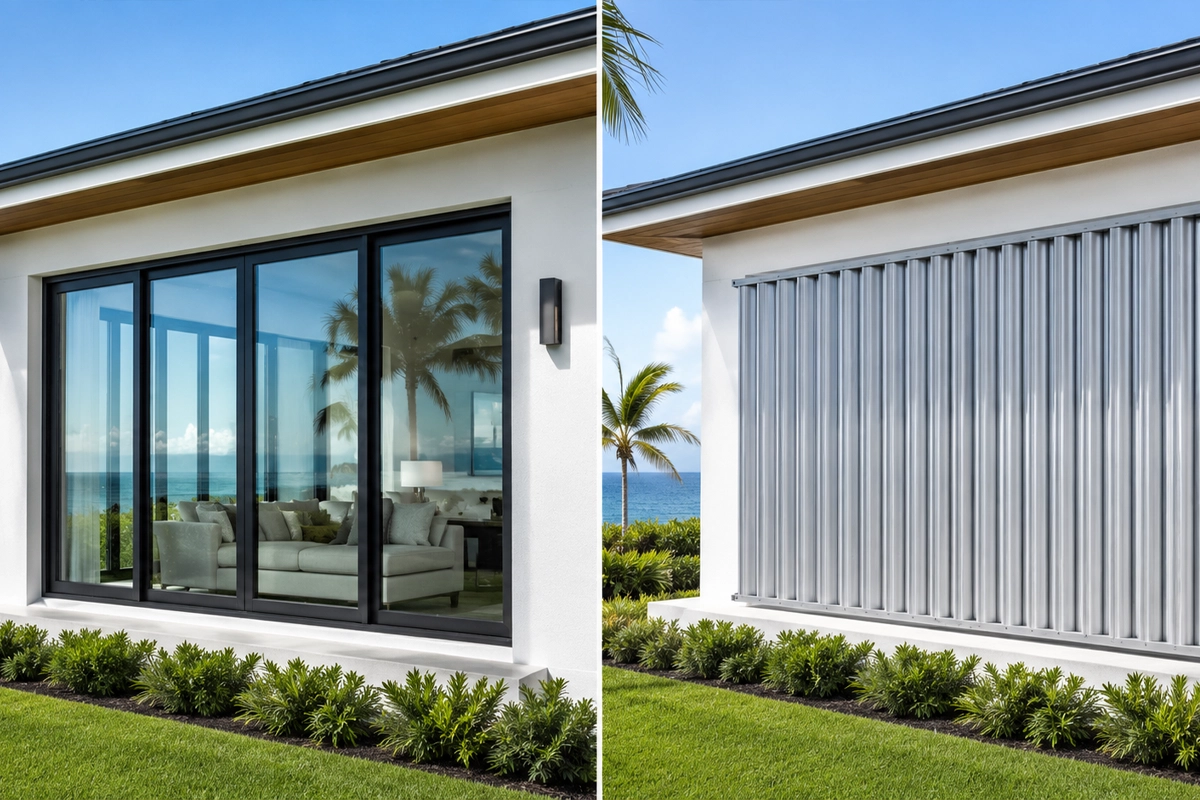
FEMA identifies physical opening-protection systems, including shutters and certain screens, as methods that can protect glazing from wind-borne debris.
FEMA also notes that these protective systems are not necessarily designed to reduce the wind pressure acting on the window itself.
That distinction matters.
A screen can protect against debris without turning the underlying window into a higher-pressure structural window.
How are approved hurricane screens installed?
Depending on the system, they can use:
- Tracks
- Roll-down mechanisms
- Anchors
- Tensioning
- Side retention
- Header and sill attachments
The approval defines how the system must be installed.
Are hurricane screens permanent?
Some are permanently mounted and deploy when needed.
Others may be removable.
The practical questions include:
- Who deploys them?
- How long does deployment take?
- Where are removable components stored?
- Can upper-floor openings be reached safely?
- What maintenance is required?
Impact windows or hurricane screens?
Impact windows provide permanent protection at the protected opening when properly approved and installed.
Hurricane screens can be a separate protective layer over existing glazing.
The right choice depends on:
- Existing windows
- Budget
- Appearance
- Deployment preference
- Opening size
- Permit conditions
- Maintenance
See our impact windows vs shutters guide for another opening-protection comparison.
Frequently asked questions
Are hurricane screens the same as insect screens?
No. Approved hurricane screens are engineered impact-protection systems.
Can hurricane screens be HVHZ approved?
Yes. Current Florida approvals include HVHZ impact screen systems.
Do hurricane screens reduce wind pressure on the existing window?
Not necessarily. FEMA specifically distinguishes debris protection from structural pressure resistance.
Do hurricane screens need product approval?
For regulated hurricane protection, verify the exact applicable approval and installation conditions.
Authoritative sources
- Florida Product Approval — Magnatrack Hurricane System Fabric Roll Shutter
- Florida Product Approval — Fenetex Hurricane Screens
- FEMA — Local Officials Guide to Coastal Construction
The bottom line
If a screen is being sold as hurricane protection, ask for the approval. Mesh appearance alone does not establish impact performance.
AA Glass & Windows can help evaluate permanent impact-window and opening-protection strategies. Request a free estimate to discuss your openings.