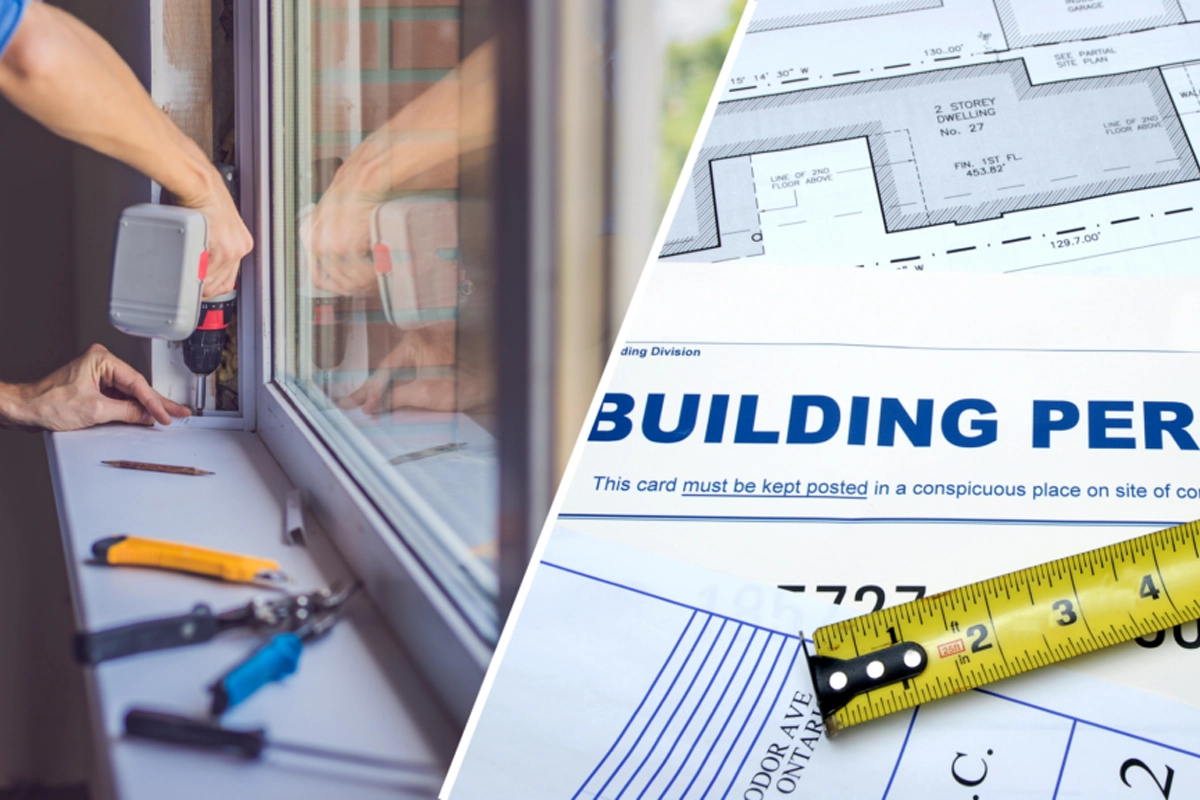
An impact window is only as useful as the approved installation that connects it to the building.
Florida product-approval drawings commonly show different installation conditions for concrete, masonry, wood framing and wood bucks.
Those details are not interchangeable.
What is a window buck?
A window buck is a framing member installed around or within an opening so the window can be attached to the building.
In Florida construction, wood bucks are common around masonry openings.
The buck can affect:
- How the window is positioned
- Where the anchors penetrate
- How loads transfer to the wall
- Edge distance
- Shim space
- Sealant conditions
A buck is not automatically structural just because it is made from pressure-treated wood.
Why does buck thickness matter?
Miami-Dade’s current window and door permit guidance specifically calls for wood buck calculations when the buck thickness is 1½ inches or greater.
That reflects a broader structural principle: the buck needs to transfer the window loads into the building.
Published Florida Product Approval installation drawings also distinguish between conditions such as:
- Anchoring through a 1X buck into concrete
- Anchoring into a 2X wood buck or wood structure
- Direct anchorage to a structural substrate
The exact product drawing controls the permitted condition.
What is the substrate?
The substrate is the structural material receiving the anchor or supporting the window installation.
Depending on the building, that can include:
- Concrete
- Concrete masonry
- Wood framing
- Structural wood bucks
- Steel framing in approved systems
The product approval can specify different anchor types, embedment and edge distances for different substrates.
Do not copy the anchor schedule from another project without confirming the substrate.
Why does anchor type matter?
Impact-window approvals can specify:
- Anchor diameter
- Anchor type
- Material
- Minimum embedment
- Maximum spacing
- Minimum edge distance
- Maximum shim space
- Substrate strength or condition
Changing one of those details can change the approved installation.
That is why adding “extra screws” is not a substitute for following the engineering.
Our impact-window design pressure guide explains how the structural requirement connects to the product’s approved installation.
What is embedment?
Embedment is the required depth that an anchor penetrates into the approved structural material.
A fastener passing through drywall, stucco, trim or a thin nonstructural piece does not automatically achieve the required embedment.
The installation drawing identifies the material into which the fastener must engage.
Why does edge distance matter?
Anchors placed too close to the edge of concrete, masonry or wood may not perform the same way as the approved test condition.
Product drawings therefore specify edge-distance limits.
An installer should not move anchors arbitrarily simply because another location is easier to drill.
What about shim space?
Shims help position the window square and plumb inside the rough opening.
But product approvals can limit the maximum gap between the frame and substrate.
If the opening is badly out of square or oversized, a large improvised gap can create a condition outside the approved detail.
That should be resolved before treating the opening as ready for installation.
Do bucks need sealant or flashing?
Water management is separate from structural anchorage, but both are part of a good installation.
Manufacturer and code-compliant details can include:
- Back-bed sealant
- Perimeter sealant
- Flashing
- Sill treatment
- Drainage
- Buck protection
Follow the product and project-specific instructions rather than assuming one sealant method works everywhere.
What should homeowners ask before installation?
Ask the contractor:
- What substrate is at each opening?
- Is there an existing wood buck?
- Will the existing buck remain or be replaced?
- Which installation detail applies?
- What anchor type is approved?
- What embedment is required?
- What edge distance is required?
- What maximum shim space applies?
- Is engineering needed for the buck or opening?
- How will flashing and sealant be handled?
Those are legitimate project questions, not micromanagement.
Frequently asked questions
Can impact windows be screwed directly into concrete?
Some approved systems include direct-to-concrete installation details. The exact product approval determines whether that condition is allowed and which anchors are required.
Can a 1X wood buck support an impact window?
Some approvals include installation through a thinner wood buck into the structural substrate. Do not assume the buck itself is carrying the load.
Can a 2X buck carry the window load?
Only when the buck and its attachment to the building satisfy the applicable structural requirements and approved detail.
Does more anchoring always make the window stronger?
No. The approved anchor type, spacing, edge distance and embedment should be followed. Random extra fasteners do not replace engineering.
Authoritative sources
- Miami-Dade County — Windows, Shutters, Doors and Security Bars
- Florida Building Commission — Product Approval Search
- Florida Product Approval installation drawing — example buck and anchor conditions
- Florida Product Approval installation drawing — example 1X and 2X buck conditions
The bottom line
The window, anchors, buck and substrate work as one load path.
Before installation, identify the actual opening condition and use the approval detail that matches the product, substrate, anchor, spacing, embedment and pressure requirement.
AA Glass & Windows can help plan impact-window replacements around the actual opening conditions. Request a free estimate to review your project.