When Florida homeowners compare impact-window quotes, one of the most important numbers is also one of the easiest to misunderstand: design pressure, often shortened to DP.
A quote may show values such as positive and negative pressures in pounds per square foot. A product approval may list one set of pressures for one size or configuration and a different set for another. Permit documents may require a specific positive and negative pressure for each opening.
That does not mean DP is simply another name for hurricane category, wind speed, or impact resistance.
Design pressure is part of the structural wind-load picture for the specific window or door assembly and the specific opening where it will be installed. In Florida, understanding that distinction can help homeowners compare proposals more intelligently and avoid assuming that a product is suitable merely because it is marketed as “hurricane rated.”
This guide explains what DP means, why positive and negative values matter, where to find them, and what to verify before ordering impact windows or doors.
Important: Wind-load design, product selection, and permit requirements are project-specific. This article is general educational information and is not a substitute for the project documents, product approval, licensed contractor, design professional, or authority having jurisdiction for your property.
Quick answer: what does DP mean on an impact window?
DP means design pressure. It describes the pressure load a window or door assembly is rated to resist under its tested or approved configuration, typically expressed in pounds per square foot (psf).
For Florida homeowners, the most useful way to think about DP is:
- Positive pressure represents wind pressure pushing inward on the assembly.
- Negative pressure represents suction pulling outward on the assembly.
- The required pressure is tied to the building and opening, not just the product brand.
- The product’s approved pressure must be adequate for the pressure required at that opening.
- The rating applies only within the size, glass, frame, anchoring, substrate, and other limits documented in the applicable approval.
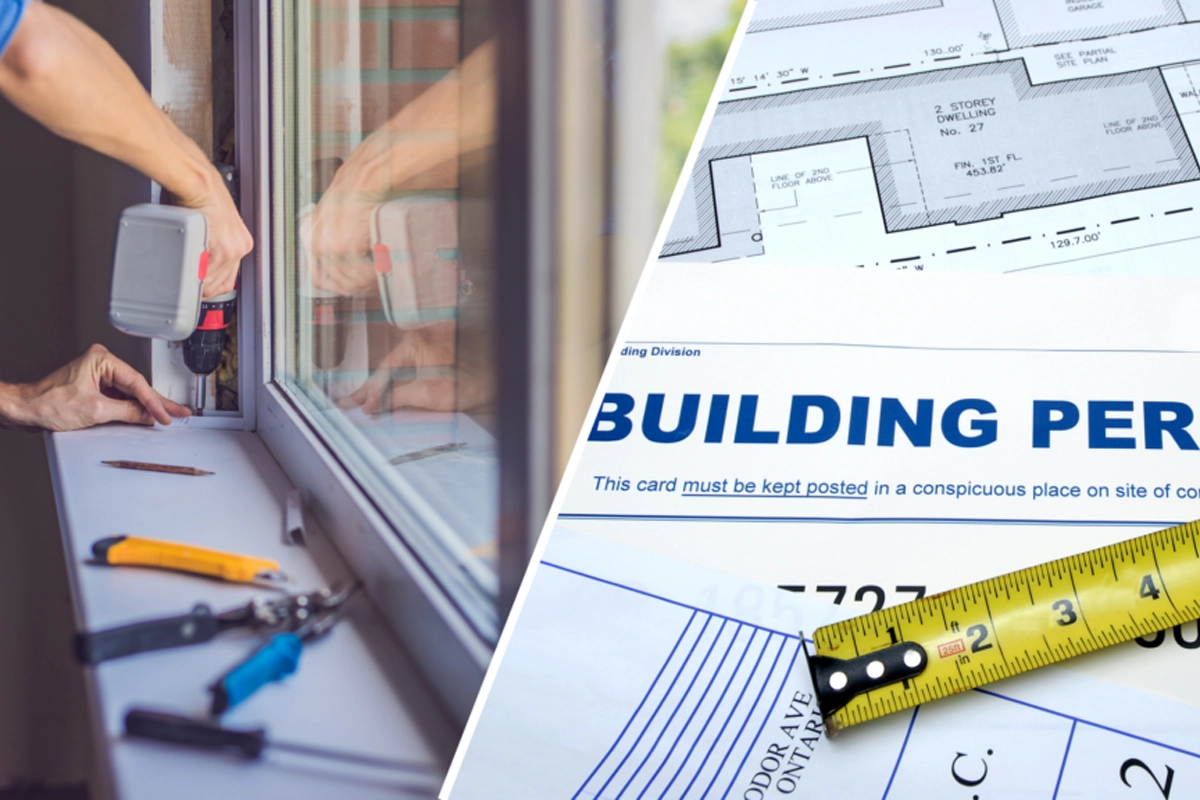
In Miami-Dade County, current permit guidance for new windows, mullions, and glass doors specifically requires plans to identify the required positive and negative pressures of each window or door, along with sizes and product approval numbers.
That is why DP should be treated as a project-selection requirement, not a marketing badge.
What is positive design pressure?
Positive pressure occurs when wind pushes toward a building surface.
A simple example is a wall facing directly into the wind. Wind striking that wall creates inward pressure on the windows and doors installed in it.
The product and its attachment to the structure must be able to resist that inward load without exceeding the approved conditions for the assembly.
What is negative design pressure?
Negative pressure is the outward suction created as wind moves around and over a building.
Side walls, leeward surfaces, edges, and corners can experience substantial suction. In many real projects, the negative requirement can be different from the positive requirement.
This is why Florida product documentation commonly shows a pair of values rather than one generic “wind rating.”
For example, a product approval may identify one positive pressure and a different negative pressure. Both need to be checked against the project requirement.
Why can two windows on the same house need different pressure ratings?
Because wind pressure is not distributed uniformly across every surface of a building.
The required wind load for an opening can be influenced by factors such as:
- Building location
- Basic design wind speed used for the project
- Building height
- Surrounding exposure and terrain conditions
- Building geometry
- Opening size
- Position of the opening on the wall
- Proximity to corners or other higher-pressure zones
- Whether the building is enclosed or has other relevant design conditions
That means two windows with the same manufacturer and series can still require different project review if they are different sizes or located in different pressure zones.
A large opening near a corner should not automatically be assumed to have the same requirement as a smaller opening closer to the center of a wall.
Why DP is not a simple hurricane-category number
One of the most common shortcuts online is converting a DP number directly into a hurricane category or a single wind speed.
That shortcut can be misleading.
Wind pressure depends on more than wind speed alone. Building height, exposure, geometry, opening location, and other design variables affect the pressure acting on a component.
A statement such as “DP 50 equals a certain hurricane category” removes those variables and can give a homeowner false confidence about a product’s suitability for a particular opening.
The safer comparison is:
- Determine the required positive and negative pressure for the opening through the project’s applicable design and permit process.
- Identify the exact product approval and configuration proposed.
- Confirm that the approved product capacity covers the required pressures for that size and installation condition.
Do not replace that process with a wind-speed conversion chart from a sales page.
Impact resistance and design pressure are not the same thing
This distinction is critical.
Impact resistance addresses the assembly’s ability to satisfy applicable impact-testing requirements for wind-borne debris protection.
Design pressure addresses structural pressure capacity.
A Florida Product Approval record can identify these characteristics separately. The state approval system includes fields for whether a product is impact resistant and for the design pressure associated with the approved product.
So a homeowner should not assume:
- “Impact rated” automatically means adequate DP for every opening.
- A high DP number automatically means the product is impact resistant.
- A product approved somewhere in Florida is automatically suitable for every Florida jurisdiction or building condition.
If you want a broader explanation of the approval system, read our guide to Florida Product Approval for impact windows and doors.
Where do you find a window’s design pressure?
The most reliable place is the current product approval documentation for the exact product and configuration.
Depending on the project and jurisdiction, that may include:
- Florida Product Approval records
- Miami-Dade Notice of Acceptance documentation
- Approved installation instructions
- Product evaluation reports
- Permit plans or engineering documents
- Manufacturer technical documentation tied to the approval
Do not rely only on a showroom label, brochure headline, or generic product-family page.
The exact approval can contain limitations involving:
- Maximum unit width and height
- Glass type and thickness
- Frame configuration
- Mullions
- Positive design pressure
- Negative design pressure
- Impact classification
- HVHZ eligibility
- Anchor type
- Anchor spacing
- Minimum embedment
- Edge distance
- Substrate
- Installation method
Those details are part of the approved assembly.
Why product size matters
A pressure rating should not be treated as a blanket rating for every possible size in a product series.
The structural behavior of an assembly changes as dimensions and configuration change. Product approval tables may list different allowable pressures for different sizes, glass options, mullion conditions, sill configurations, or other variables.
For a homeowner, the practical rule is simple:
Ask whether the quoted DP applies to the exact unit size being ordered.
Do not assume that a pressure shown for a smaller laboratory-tested or approved configuration automatically applies to a much larger opening.
Why anchors and substrate matter to DP
The window does not resist wind by itself.
Loads must move from the glass and frame through the attachment system into the surrounding structure.
That is why approved installation instructions can specify:
- Anchor material and type
- Quantity or spacing
- Location around the frame
- Minimum embedment
- Minimum distance from substrate edges
- Concrete, masonry, wood, or other approved substrate conditions
- Shims or installation clearances
Changing the attachment method can change whether the installed assembly matches its approval.
Adding random extra fasteners is not a substitute for following the approved detail, and fewer anchors should never be assumed acceptable because the frame “feels strong.”
Our impact-window installation process guide explains why product documentation, permitting, installation, inspection, and closeout all belong to the same project workflow.
What Miami-Dade currently requires on window permit plans
Miami-Dade County provides a particularly clear example of how pressure data enters a real permit package.
Its current guidance for new windows, mullions, and glass doors says permit plans must identify:
- Location of each window, mullion, or glass door
- Sizes
- Product approval numbers
- Mullion approval information when applicable
- Required positive and negative pressures for each window or door
The county notes that the pressure information is typically found in product approval documents under design/pressure ratings.
The same page also requires a current Notice of Acceptance for each window or door panel used and says applicable Florida Building Commission product approvals are acceptable.
Permit procedures vary by jurisdiction, so Miami-Dade’s checklist should not be treated as the filing checklist for every city or county in Florida. But it demonstrates why DP is not an optional sales specification: it is part of product selection and permit documentation.
Does a higher DP always mean a better window?
Not necessarily.
A product with greater structural pressure capacity may be useful for an opening with a higher requirement, but the highest number is not automatically the best buying decision.
A complete comparison still needs to consider:
- Whether the exact configuration is approved for the project
- Impact status
- HVHZ eligibility when applicable
- Size limitations
- Glass package
- Energy performance
- Operating style
- Water performance
- Anchoring and substrate requirements
- Warranty terms
- Installation quality
- Availability and project fit
A product can have an impressive DP number and still be the wrong configuration for the opening.
For a broader product-selection framework, see how to choose the best impact windows for a Florida home.
Design pressure vs. water penetration resistance
Another common mistake is assuming one DP number tells you everything about structural performance and water resistance.
It does not.
Structural pressure capacity and water penetration resistance are related parts of fenestration testing, but they are not interchangeable values.
This distinction became even more visible in 2026 when the Fenestration and Glazing Industry Alliance announced publication of NAFS-26, the new North American Fenestration Standard. FGIA says the updated secondary designator is now mandatory in that standard and identifies:
- Positive design pressure
- Negative design pressure
- Water penetration resistance test pressure
Keeping those values separate helps prevent a structural DP from being mistaken for a water-test pressure.
Important Florida code note
Publication of NAFS-26 does not mean Florida automatically adopted the new standard on the same date.
As of September 2026, the Florida Building Commission still identifies the Florida Building Code, 8th Edition (2023) as the current code, effective December 31, 2023, while the state is separately working through its 2026 code-update process.
For an actual project, use the code and product approval applicable to the permit—not a standards announcement by itself.
Why the exact product approval revision matters
Product approvals can be revised.
A quote that lists only a manufacturer name or product series may not give you enough information to verify the current approved conditions.
Ask for the complete approval reference, including the revision where applicable, and check:
- Whether it is current
- Whether it applies to the proposed window type
- Whether the proposed size is within the approved limits
- Whether the listed positive and negative pressure values are adequate
- Whether the impact classification is correct
- Whether HVHZ use is allowed when required
- Whether the anchor/substrate condition matches the project
If you are checking existing windows rather than a new quote, our guide on how to tell if windows are impact resistant explains how labels, approval numbers, permit records, and product documentation work together.
What should be shown on a good impact-window proposal?
Before signing, ask the contractor to make the product selection easy to verify.
A strong proposal or supporting submittal should let you identify:
- Manufacturer
- Product series
- Window or door type
- Exact size or opening schedule
- Florida Product Approval or Miami-Dade NOA number, as applicable
- Approval revision when applicable
- Impact status
- HVHZ eligibility when applicable
- Product positive DP
- Product negative DP
- Required positive pressure for the opening
- Required negative pressure for the opening
- Glass package
- Mullion requirements where applicable
- Relevant installation/anchoring condition
Not every sales estimate will contain a full engineering schedule on its first page, but the contractor should be able to provide the documentation needed to demonstrate that the proposed system matches the project.
A homeowner DP checklist before ordering
Use this checklist before approving an impact-window or impact-door order.
Product identity
- Manufacturer confirmed
- Series/model confirmed
- Exact opening type confirmed
- Exact unit dimensions confirmed
Approval
- Approval number provided
- Current revision checked
- Impact status verified
- HVHZ status checked when applicable
- Proposed size/configuration is within the approval limits
Pressure
- Required positive pressure identified
- Required negative pressure identified
- Product positive pressure is adequate for the opening
- Product negative pressure is adequate for the opening
- No direct “DP-to-hurricane-category” shortcut is being used as the engineering basis
Installation
- Approved substrate condition matches the property
- Anchor type and installation method are identified
- Mullions are included where required
- Permit/engineering responsibility is clear
- Final inspection and closeout responsibility is clear
Red flags when someone explains DP
Be cautious if a proposal or sales explanation relies on statements such as:
- “Every window in this series has the same DP.”
- “This DP number means it is safe in any Category 5 hurricane.”
- “If it is impact glass, the pressure rating does not matter.”
- “The biggest DP number is automatically the best product.”
- “The same pressure applies to every opening on the house.”
- “The approval number is not important as long as the brand is approved.”
- “We can change the anchors in the field and the rating stays the same.”
Those statements skip the opening-specific and approval-specific details that determine whether a product is appropriate for a project.
How design pressure fits with hurricane protection
Design pressure is only one part of the hurricane-protection decision.
For a Florida impact-window project, homeowners should evaluate at least four separate questions:
- Does the property/opening require wind-borne debris protection?
- Is the proposed product impact resistant under the applicable approval?
- Does the approved configuration have adequate positive and negative design pressure for the opening?
- Will it be installed according to the approved method and permitted requirements?
Our guide on whether impact windows are required in Florida explains why impact windows are one opening-protection path rather than a universal statewide requirement for every home.
Frequently asked questions
What does DP stand for on impact windows?
DP stands for design pressure. It is a pressure rating, usually stated in pounds per square foot, associated with the tested or approved structural performance of the window or door assembly.
What is the difference between positive and negative DP?
Positive pressure pushes inward on the building surface. Negative pressure is outward suction. A window or door can have different approved positive and negative pressure values, so both need to be compared with the project requirement.
Is DP 50 equal to a specific hurricane wind speed?
Do not treat DP as a direct hurricane-category or wind-speed conversion. Wind pressure depends on factors such as building height, exposure, geometry, and opening location. Use the required project pressures and the exact product approval rather than a generic conversion chart.
Does every impact window on a house need the same DP?
Not necessarily. Required pressures can vary with opening size and location on the structure, among other project variables. Permit or engineering documents should identify the applicable requirements.
Is a higher DP always better?
A higher approved structural capacity can be useful when the opening requires it, but the product still needs the correct impact status, size/configuration, approval, HVHZ eligibility when applicable, anchoring, glass, and other project requirements. Higher DP alone does not make a window universally better.
Can an impact-rated window still have the wrong DP for my opening?
Yes. Impact resistance and design pressure are separate characteristics. A product can be impact resistant but still be unsuitable if its approved positive or negative pressure capacity does not meet the requirement for that opening.
Where can I verify a Florida window’s DP rating?
Use the current Florida Product Approval or Miami-Dade NOA documentation applicable to the exact product and configuration. Permit plans and manufacturer technical documents tied to the approval can also identify required and approved pressures.
Does DP tell me the window’s water rating?
No. Structural design pressure and water penetration resistance should not be treated as the same value. Review the applicable product testing and approval documentation for both.
Who determines the required DP for my project?
The required pressures come from the applicable wind-load design and permit process for the building. Depending on the project and jurisdiction, the information may be prepared or documented by a contractor, engineer, architect, manufacturer engineering resource, or other qualified party under the applicable code and local permitting requirements.
Official and primary sources
For current technical and permitting information, use primary sources rather than generic wind-speed charts:
- Florida Building Commission — Building Code Information System
- Florida Building Commission — Product Approval Search
- Miami-Dade County — Windows, Shutters, Doors and Security Bars
- Miami-Dade County — Product Testing Inquiries
- 2026 Florida Statutes §553.842 — Product evaluation and approval
- FGIA — 2026 North American Fenestration Standard Published
- U.S. Department of Energy / PNNL Building America Solution Center — Windows and Doors Are Fully Flashed
The bottom line
For Florida impact windows, design pressure is not a hurricane-category shortcut. It is part of matching a tested and approved window or door assembly to the wind-load requirement of a specific opening.
A useful buying process verifies the exact product approval, size/configuration, impact status, positive and negative pressure capacity, anchoring condition, and project requirement before the product is ordered.
That documentation-focused approach is more meaningful than choosing a window simply because a salesperson says it has a “high DP.”
If you are planning an impact-window or impact-door project, AA Glass & Windows can help you review product options and the documentation needed for the proposed openings. Explore our impact windows service or request a free estimate to start with the property and project scope.