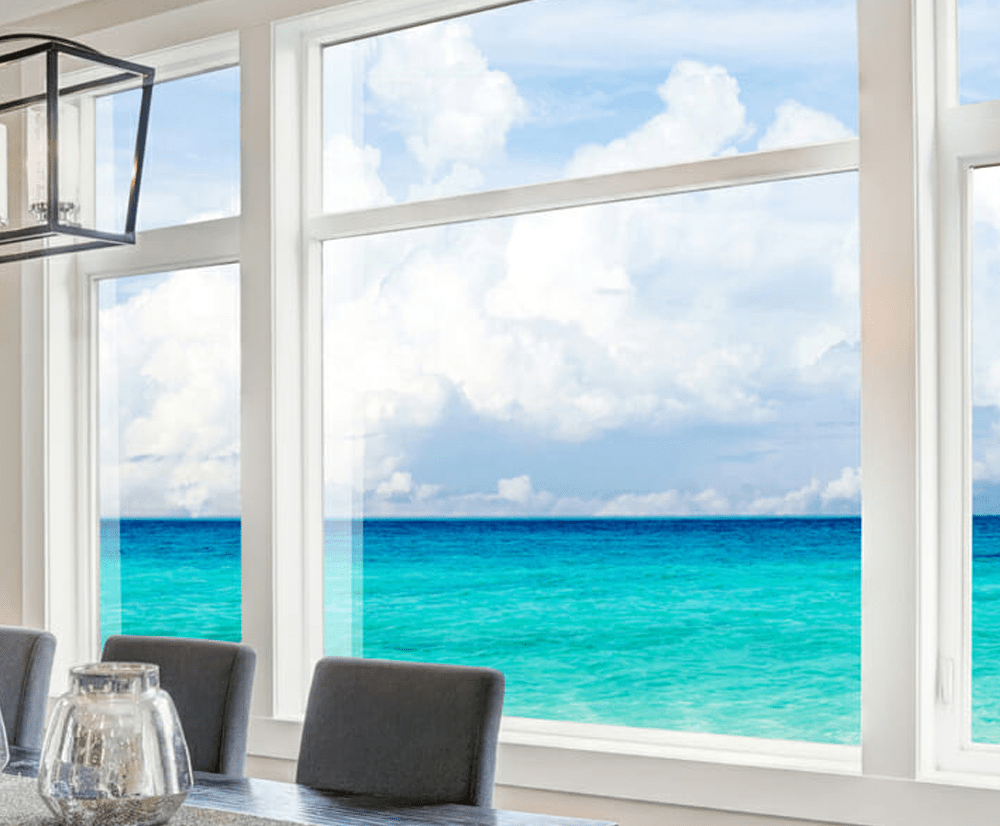
For a beachfront Florida property, impact-window selection can involve more than wind, water and energy performance.
Artificial light visible from a nesting beach can affect sea turtles.
That means window tint, interior lighting, curtains and local coastal-lighting rules may become part of the project.
What does FWC recommend for windows visible from the beach?
The Florida Fish and Wildlife Conservation Commission advises coastal properties to reduce interior light visible from nesting beaches.
Its current sea-turtle lighting guidance recommends, among other measures:
- Closing window coverings at night
- Moving lights away from windows
- Using lower, warmer light where appropriate
- Applying window tint when needed to reduce visible interior light
FWC specifically references tint meeting 45% or less inside-to-outside transmittance for glass, windows, doors or railings in this context.
Does that mean every Florida impact window needs 45% glass?
No.
FWC’s guidance applies to sea-turtle lighting concerns for properties affecting nesting beaches.
The actual legal requirement can depend on:
- Property location
- Local ordinance
- Beach visibility
- Municipality or county
- New construction vs alteration
- Approved local lighting plan
Do not apply a beachfront lighting requirement to every inland Florida project.
Is “turtle glass” a separate impact rating?
No.
“Turtle-friendly” light-transmission characteristics and hurricane-impact approval answer different questions.
A coastal window may need to satisfy both:
- Applicable impact/wind/product approval requirements
- Applicable coastal-lighting or visible-light requirements
The glass package should be checked for both.
Can tint affect energy performance?
Yes.
Tint and Low-E coatings can change visible light and solar heat gain.
Do not assume darker always means better energy efficiency.
Compare the exact whole-window NFRC ratings, especially:
- SHGC
- U-factor
- Visible transmittance
Our Low-E, SHGC and U-factor guide explains those metrics.
Can curtains solve the problem instead?
FWC specifically recommends window treatments as one method of controlling interior light visible from the beach.
But if a local ordinance requires a particular glass transmittance, curtains may not replace that requirement.
Check the jurisdiction before ordering the glass.
What should a beachfront homeowner ask?
Before selecting glass, ask:
- Is the property visible from a nesting beach?
- Does the city or county have a sea-turtle lighting ordinance?
- What visible-light transmittance is required?
- Is the proposed impact glass available in that configuration?
- What are the NFRC ratings?
- Does the tint change interior appearance or color?
- Are curtains/blinds also recommended?
- Does the HOA have separate glass-color rules?
What about existing windows?
Existing properties may still receive notices when interior or exterior lighting is visible from the beach.
FWC provides practical correction steps for residents who are notified that lighting is creating a potential turtle hazard.
That can include adjusting lights, coverings and tint.
Frequently asked questions
What visible-light level does FWC reference for tinted glass?
FWC’s current guidance references 45% or less inside-to-outside transmittance in its sea-turtle lighting recommendations.
Does turtle-friendly glass automatically mean impact rated?
No. Impact approval is a separate product-performance requirement.
Do local ordinances matter?
Yes. Coastal counties and municipalities can have their own sea-turtle lighting rules.
Can Low-E replace turtle tint?
Not automatically. Compare the exact visible-light transmittance and local requirement.
Authoritative sources
- Florida Fish and Wildlife Conservation Commission — Sea Turtles and Lights
- Florida Building Commission — Product Approval Search
- NFRC — Window energy-performance ratings
The bottom line
For beachfront projects, treat turtle-friendly light control and hurricane-impact approval as separate requirements that the selected glass package may need to satisfy together.
AA Glass & Windows serves coastal Florida communities and can help compare available impact-glass options. Request a free estimate to review your property.