Yes, impact windows can be energy efficient, but impact resistance and energy efficiency are not the same thing.
An impact window is engineered primarily to resist wind pressure and windborne debris. Its energy performance depends on the complete window system: the glass package, Low-E coating, number of glazing layers, frame construction, air leakage, size, orientation, and installation quality.
That distinction matters in Florida. A window can be impact rated without having the best solar-control package for a hot climate, while another impact window can combine hurricane protection with glass and frame features designed to reduce unwanted heat gain.
If you are replacing windows in South or Central Florida, the better question is not simply, “Are these impact windows?” It is: What are the actual energy-performance ratings of the impact windows being proposed for my home?
The short answer for Florida homeowners
Energy-efficient impact windows can help reduce the amount of outdoor heat that enters through the window system and can reduce heat transfer between conditioned indoor space and the outdoors. That can make rooms easier to keep comfortable and can reduce the cooling load associated with inefficient windows.
However, no reputable contractor should promise a specific electric-bill reduction without evaluating the home. Actual energy use depends on many factors beyond the windows, including insulation, HVAC efficiency, thermostat settings, air leakage, shading, orientation, roof performance, occupancy, and weather.
For Florida homeowners, the most useful window-performance numbers to compare are usually:
- U-factor
- Solar Heat Gain Coefficient (SHGC)
- Air leakage, when a rated value is available
- Visible transmittance, if daylight and tint are important to you
The U.S. Department of Energy identifies U-factor and SHGC as primary measures of fenestration energy performance. In warm climates, DOE recommends paying particular attention to a low SHGC to reduce unwanted solar heat gain.
Impact resistance and energy efficiency measure different things
It is easy to assume that every hurricane-rated window is automatically an energy-efficient window. That is not necessarily true.
Impact performance is about how the complete assembly performs under required structural and impact testing. Energy performance evaluates how the window manages heat flow, solar heat gain, and related thermal characteristics.
A good Florida window can address both goals, but you should confirm both sets of specifications.
When comparing options through AA Glass & Windows, start with the impact window service and then review available glass options rather than choosing a product based only on the words “impact” or “hurricane.”
What U-factor means
U-factor measures the rate of heat transfer through the window assembly. Lower numbers indicate less heat flow through the product.
DOE notes that U-factor is influenced by the glazing system as well as the frame and sash. Features that can lower thermal transmittance include multiple glazing layers, Low-E coatings, gas fills in insulated glazing, and frame designs that limit conductive heat transfer.
In Florida, U-factor still matters because conditioned indoor air is separated from hot, humid outdoor conditions for much of the year. But for a sun-exposed home in a cooling-dominated climate, U-factor is only part of the story.
Why SHGC is especially important in Florida
Solar Heat Gain Coefficient, or SHGC, measures how much solar heat passes through a window. It is expressed on a scale from 0 to 1. A lower SHGC means less solar heat is transmitted through the window system.
That makes SHGC particularly important in hot, sunny climates.
DOE’s hot-climate guidance recommends windows with low SHGC values to reduce unwanted heat gain. The agency also notes that Low-E coatings, especially spectrally selective coatings, can reduce solar heat gain while preserving useful visible light.
For a homeowner, this can be especially relevant in:
- West-facing rooms that become hot in the afternoon
- Large living-room glass openings
- Bedrooms with strong sun exposure
- Sliding or fixed glass areas
- Homes with limited exterior shading
- Properties where older clear glass allows substantial solar heat into the interior
A lower SHGC does not mean the room will never feel warm. It means the window is designed to admit a smaller fraction of the sun’s heat than a higher-SHGC product.
A useful South Florida ENERGY STAR benchmark
ENERGY STAR divides the country into climate zones and applies different window criteria by zone.
For example, Broward County is currently in ENERGY STAR’s Southern Climate Zone. For windows, the current Southern Zone criteria list a U-factor of 0.32 or lower and an SHGC of 0.23 or lower.
Those numbers are useful as a comparison benchmark, but they should not be confused with impact-rating requirements or a guarantee that a particular product is right for every opening. The proposed window still needs to satisfy the structural, product-approval, design-pressure, size, and installation requirements that apply to the project.
Climate-zone criteria can also change over time, so verify the current ENERGY STAR and NFRC information when making a purchase decision.
What Low-E glass does
Low-E, short for low-emissivity, refers to a thin coating applied to a glass surface to manage radiant heat transfer.
Low-E is one of the most important terms homeowners will encounter when comparing energy-efficient impact windows, but not every Low-E package is the same. Coatings can be designed for different climates and solar-gain goals.
For Florida, a solar-control Low-E configuration can be useful because it can reduce the amount of solar heat entering the home without requiring extremely dark glass.
Depending on the product, a Low-E package may help with:
- Lower solar heat gain
- Improved thermal performance
- Reduced ultraviolet exposure to interior finishes and furnishings
- Better comfort near sun-exposed glass
- Maintaining more natural light than some heavily tinted alternatives
The exact result depends on the coating, glass makeup, frame, and whole-window rating. Ask for the actual NFRC-rated U-factor and SHGC instead of relying only on a “Low-E” label.
Laminated impact glass vs. insulated impact glass
Impact windows commonly use laminated glass as part of the impact-resistant glazing construction. Laminated glass contains an interlayer that helps keep broken glass bonded together after impact.
But laminated impact glazing can be configured in different ways.
Some systems use a laminated glass makeup without a separate insulating air space. Other impact products use an insulating glass unit, often called an IGU, that combines multiple glazing layers with a sealed space between them while incorporating the laminated component needed for impact performance.
Insulating glass can improve thermal performance, but the full rating still depends on the entire assembly. The number of panes alone does not tell you whether one window is more energy efficient than another.
For example, two impact windows can both use insulated glass but have different:
- Low-E coatings
- SHGC values
- U-factors
- Frame systems
- Spacer systems
- Gas fills
- Glass tints
- Air-leakage performance
That is why the NFRC label and product documentation are more useful than broad terms such as “double pane.”
Does impact glass itself block heat?
Impact glass and solar-control glass solve different problems.
The laminated construction used for impact resistance can offer additional benefits, including security and sound-control characteristics, but homeowners should not assume that laminated glass by itself provides the lowest solar heat gain available.
If heat reduction is a major goal, compare the SHGC of the complete impact window and ask whether a Low-E or other solar-control glass option is available for the selected product line.
AA Glass & Windows’ windows catalog includes multiple impact-window families and product configurations. Some current product data also identifies optional Low-E glass on selected models, which is another reason to compare the exact model and glass package rather than treating all impact windows as interchangeable.
Frames affect energy performance too
The glass gets most of the attention, but the frame is part of the thermal system.
Aluminum is common in Florida impact-window construction because of its strength and durability, but metal conducts heat more readily than some other materials. Frame design, thermal breaks, geometry, weatherstripping, and the relationship between the frame and glazing all affect whole-window performance.
DOE specifically recommends looking at whole-product ratings rather than judging performance from the center of the glass alone.
When reviewing an impact-window proposal, ask whether the listed U-factor and SHGC are whole-window ratings from an NFRC-certified product configuration. That gives you a more useful comparison between actual window systems.
Air leakage and installation matter
A high-performance glass package cannot compensate for poor installation.
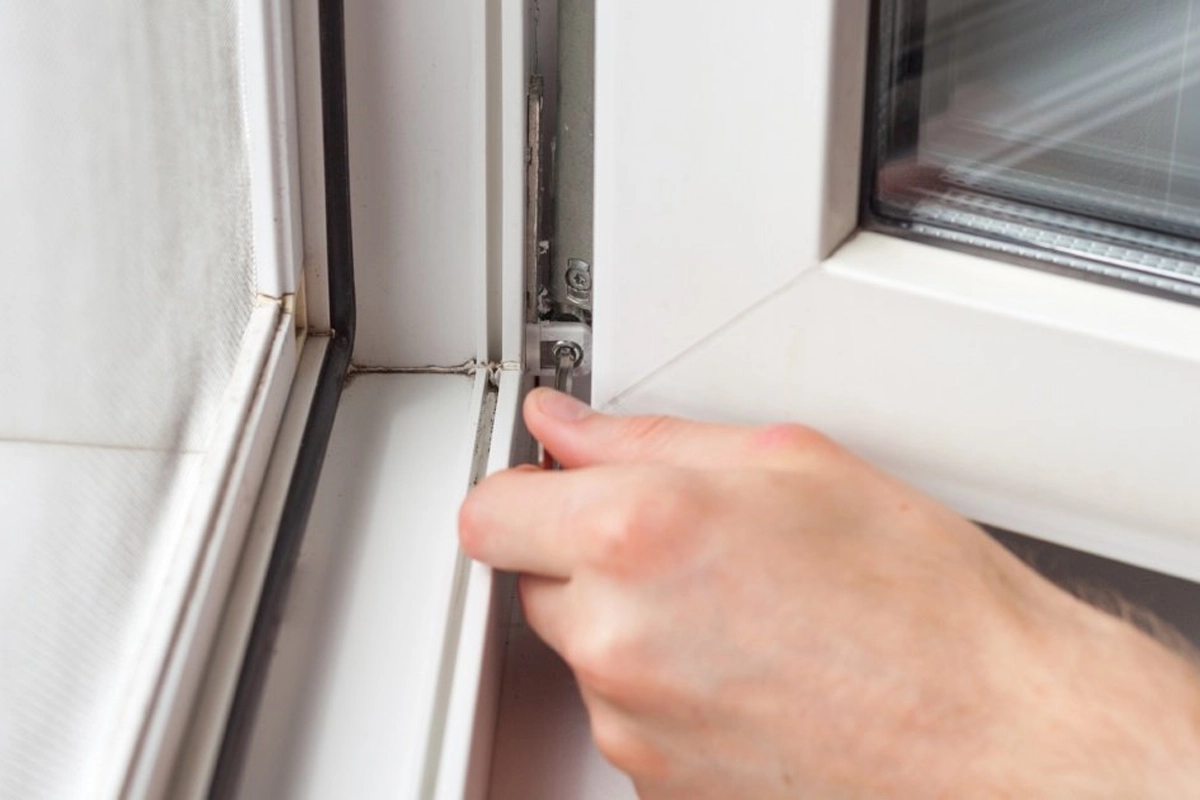
Window openings must be measured, prepared, anchored, sealed, and finished correctly. Gaps, deteriorated perimeter conditions, missing sealant, or incorrect installation can allow unwanted air and moisture movement and can undermine comfort.
This is one reason energy performance should be considered together with product approval and installation quality. The window is not just a piece of glass; it is a complete installed assembly.
If you are comparing bids, make sure the proposal clearly identifies the window model, glass package, installation scope, permitting, and finishing work. Our guide to what affects the cost of impact windows in Florida explains why those project details can change pricing.
Can energy-efficient impact windows lower your electric bill?
They can reduce the window-related cooling load compared with less efficient windows, but the amount of bill savings varies by home.
DOE explains that windows do not consume energy directly; instead, their performance affects the heating and cooling load placed on the building. Better-performing windows can reduce those loads, especially when replacing inefficient products.
The biggest opportunity may occur when a home has conditions such as:
- Older single-pane or inefficient clear-glass windows
- Strong direct sun on large openings
- Noticeable heat near windows
- Leaky or deteriorated window assemblies
- Large areas of west- or south-facing glass
- A planned whole-home replacement where glass specifications can be optimized together
A home that already has relatively efficient windows may see a smaller change than a home replacing older, poorly performing units.
Avoid relying on a generic percentage-savings claim. A trustworthy comparison should be based on the existing windows, proposed ratings, home characteristics, and local climate.
Do Low-E impact windows make a room darker?
Not necessarily.
Energy performance and visible light are related but separate characteristics. Visible transmittance (VT) indicates how much visible light passes through the glazing system.
Some solar-control products reduce heat gain while still allowing substantial daylight. Others use darker tints that reduce both solar heat and visible light.
If your home has a view, large glass openings, or rooms where daylight is important, compare SHGC and VT together. That helps you find a balance between solar control and the appearance you want.
What about UV protection?
Many laminated and Low-E glass configurations can reduce ultraviolet transmission, which can help slow fading of flooring, artwork, furniture, and interior finishes.
The exact UV performance varies by glass makeup, so ask for manufacturer data if UV reduction is an important purchasing factor. Avoid assuming that every impact window provides the same UV performance.
What should you compare before buying?
When energy efficiency is one of your goals, ask for a side-by-side comparison of the exact product configurations being proposed.
Useful questions include:
- What is the NFRC U-factor for this exact window and glass package?
- What is the SHGC?
- Does this configuration use Low-E glass?
- Is it laminated only, or is it an insulated impact-glass unit?
- What is the visible transmittance?
- Is an air-leakage rating available?
- Is the rating for the whole window rather than only the glass?
- Is this exact configuration approved for my opening size and project location?
- What frame system and finish are being proposed?
- What installation and perimeter sealing are included?
Those questions make it much easier to compare products on performance instead of marketing language.
Energy efficiency should not replace impact-performance review
A low U-factor or SHGC does not make a window hurricane rated.
For a Florida impact-window project, energy specifications need to be reviewed alongside the product’s impact approval, design pressures, size limitations, installation instructions, permitting requirements, and the conditions of the opening.
Likewise, an impact approval does not automatically mean the product has the energy performance you want.
The best project is one where the structural and energy goals are evaluated together.
Are impact windows worth upgrading for energy efficiency alone?
If your existing windows do not need replacement and your only concern is energy use, a full impact-window project may not always be the first or most cost-effective improvement to evaluate. Air sealing, attic insulation, HVAC performance, shading, ductwork, and other building-envelope improvements may also affect comfort and energy use.
But when you are already replacing windows for hurricane protection, age, operation, security, appearance, water intrusion, or renovation, choosing the right energy-performance package can add meaningful everyday value to the project.
In other words, impact protection creates the reason to upgrade the opening, while good glass and frame specifications can help the new window perform better every day.
The bottom line
Impact windows can be energy efficient, but the impact label alone is not enough to tell you how well a window controls Florida heat.
For a hot climate, compare the actual U-factor and SHGC, look at Low-E and insulated-glass options, review the whole-window NFRC rating, and make sure the installation is planned correctly. In sun-exposed Florida homes, SHGC is especially important because it directly addresses unwanted solar heat gain.
AA Glass & Windows can help you compare impact-window styles, glass packages, product approvals, and project requirements for your property. Request an estimate to review window options that balance hurricane protection, comfort, appearance, and energy performance.