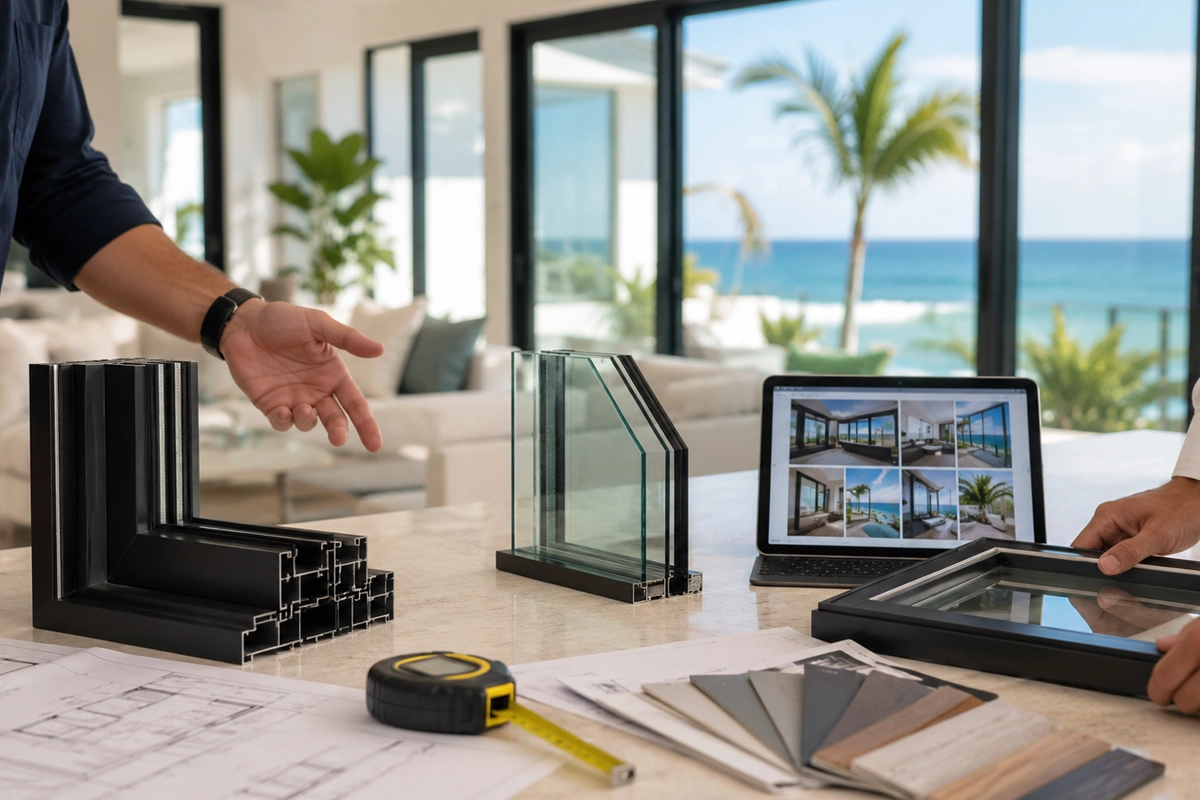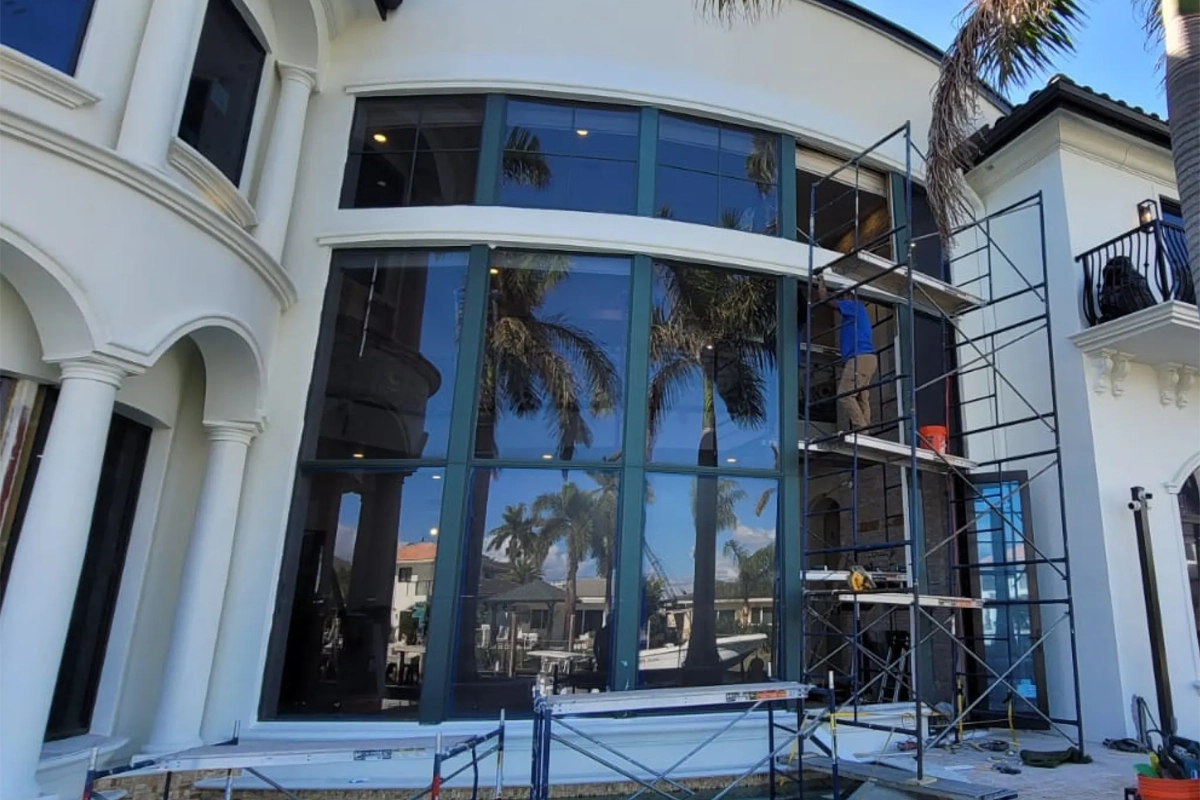
The same impact window can require different installation details in a concrete-block home than in a wood-frame home.
The difference is the structural substrate receiving the window loads.
Florida Product Approval drawings commonly publish separate installation conditions for masonry, concrete, wood framing and wood bucks.
What is the substrate?
The substrate is the structural material into which the approved anchors engage.
Common Florida conditions include:
- Concrete
- Concrete masonry unit (CMU)
- Wood framing
- Structural wood bucks
Stucco, drywall and trim are not the structural substrate.
How does concrete or masonry installation differ?
For concrete or CMU openings, the approval may specify:
- Masonry/concrete anchor type
- Minimum embedment
- Minimum edge distance
- Maximum anchor spacing
- Minimum substrate strength
- Maximum shim space
The installer needs to identify the actual wall condition before drilling.
What changes in wood-frame construction?
Wood framing uses different fastener behavior and edge-distance rules.
The approval may specify:
- Wood screw type
- Minimum penetration
- Wood species or minimum specific gravity
- Framing dimensions
- Buck attachment
- Anchor spacing
Do not use a masonry anchor schedule on a wood-framed opening.
What about wood bucks on block homes?
Many masonry homes use wood bucks around the opening.
The approval may distinguish between:
- Anchoring through a thin buck into concrete/CMU
- Anchoring into a structural 2X buck
- Direct anchorage to masonry
Those are different load paths.
Our impact-window bucks and anchors guide explains the details.
Can an old buck be reused?
Possibly, but it should be evaluated for:
- Condition
- Rot
- Splitting
- Fastening to the wall
- Dimensions
- Compatibility with the approval
A deteriorated buck should not be preserved simply to reduce finish work.
Does the window itself change?
Sometimes the same product family has multiple approved installation details.
Other times, frame type or flange configuration may differ.
Compare the exact approval for the proposed product.
Why does embedment matter?
The anchor needs to penetrate sufficiently into the structural material.
A fastener passing through:
- Stucco
- Drywall
- Nonstructural trim
- Thin wood
does not automatically satisfy the required structural embedment.
Why does this matter for permit inspections?
Inspectors can compare the installation to the approved product documents.
That can include:
- Anchor type
- Anchor spacing
- Substrate
- Frame condition
- Buck
- Product labels
- Approved drawings
A window that is impact rated but installed outside the approval can create a compliance problem.
Frequently asked questions
Are impact windows installed the same way in block and wood-frame homes?
No. The approved anchor and substrate conditions can differ.
Can installers use Tapcons in every opening?
No universal fastener applies to every product or substrate. Follow the exact approval.
Is a wood buck always structural?
No. The approval and buck attachment determine the load path.
Does the permit package identify the substrate?
Good permit documentation should connect the proposed installation to the actual opening condition and approval detail.
Authoritative sources
- Florida Building Commission — Product Approval Search
- Florida Product Approval installation drawings — example window anchorage conditions
- Miami-Dade County — Windows, Shutters, Doors and Security Bars
- Florida Division of Emergency Management — Hurricane Retrofit Guide: Openings
The bottom line
Concrete-block and wood-frame homes can use impact windows, but the anchors and load path have to match the actual substrate.
AA Glass & Windows can help identify opening conditions and product-installation requirements before work begins. Request a free estimate to review your project.