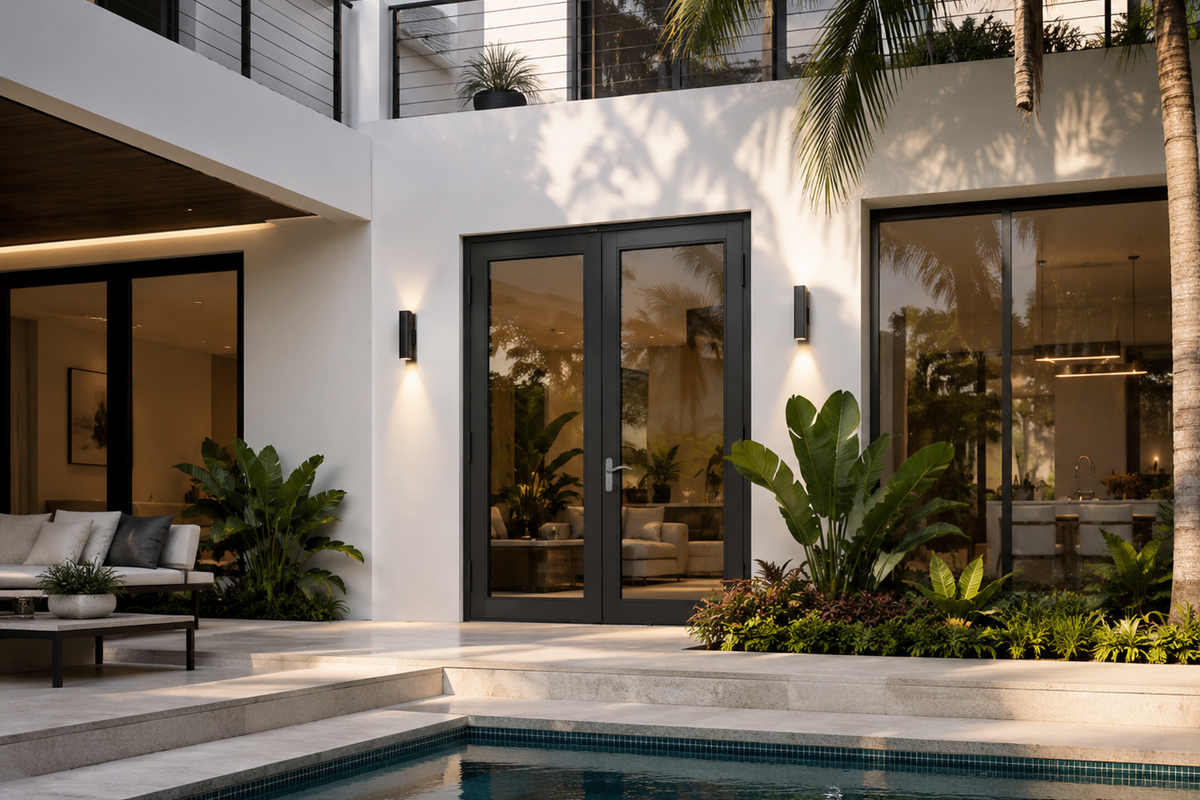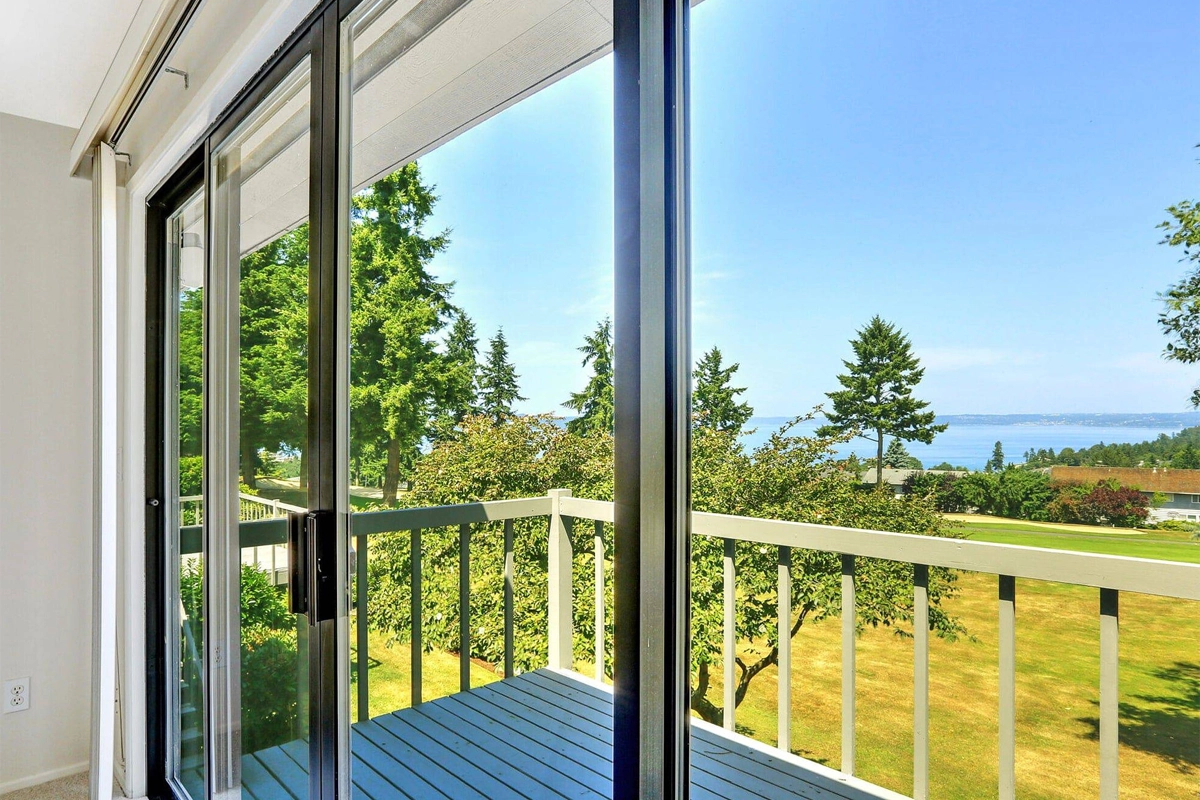
Large sliding glass doors are one of the defining features of many Florida homes. They connect living rooms, lanais, balconies, pools, and patios—but they are also large exterior openings that need the same level of product and installation review as windows and entry doors.
When shopping for impact sliding glass doors, do not compare proposals only by panel count, frame color, or whether the salesperson calls the system “hurricane rated.”
A useful comparison includes the exact product approval, impact status, opening size, panel configuration, design pressures, tracks, locks, threshold, glass package, energy ratings, installation requirements, and long-term service considerations.
Are sliding glass doors part of hurricane opening protection?
Yes. Exterior glass doors are building-envelope openings, and Florida’s statewide product-approval framework specifically covers exterior doors, windows, shutters, and impact-protective systems.
Florida Statute §553.842 also prohibits marketing products as hurricane, windstorm, or windborne-debris impact protection unless the required approval exists.
For a homeowner, that means a patio door should not be treated as an afterthought while the windows receive all the technical review.
Our broader impact-door guide explains why doors belong in a whole-home opening-protection plan.
What approval should you ask for?
Ask for the exact Florida Product Approval or Miami-Dade Notice of Acceptance associated with the proposed door series and configuration.
Then confirm details such as:
- Whether the exact series is impact rated
- Maximum approved panel and overall assembly dimensions
- Number and arrangement of panels
- Pocketing or non-pocketing conditions if applicable
- Positive and negative design pressures
- Glass type and thickness
- Anchor type and spacing
- Substrate requirements
- Threshold or sill details
- Mullion or structural conditions where relevant
- HVHZ limitations or approvals if the project is in Miami-Dade or Broward
A manufacturer’s brand reputation does not replace the approval for the exact system being installed.
Why does panel size matter?
Sliding doors can cover much larger openings than many windows. As openings grow, the approved configuration and pressure limits become especially important.
A product may have one maximum size for a particular panel arrangement and different limits for another. The same series may also use different glass, reinforcement, or anchorage depending on the opening.
Do not assume that a brochure photo of a wide multi-panel door proves that every width shown in a design concept is approved for your project.
Before ordering, have the opening measured and compare the proposed dimensions to the current product documentation.
What is design pressure on an impact sliding door?
Design pressure describes the pressure load the approved assembly is evaluated to resist under specified conditions. Positive and negative values matter because wind can push inward on one part of a building while creating outward suction on another.
The required pressure is project specific. Building height, exposure, location on the structure, geometry, and other factors can affect the design loads.
A salesperson should not convert one DP number into a universal hurricane-category promise. Our Florida design-pressure guide explains the concept in more detail.
What should you compare in the track and rollers?
Daily operation matters because sliding doors are often used far more frequently than some windows.
Ask how the selected system handles:
- Panel weight
- Roller design and replacement
- Track cleaning and maintenance
- Adjustment procedures
- Drainage paths
- Coastal salt exposure
- Replacement parts
A large impact panel can be heavier than the door it replaces. Smooth operation depends on the full system being installed, adjusted, and maintained correctly.
Do not use oil, grease, abrasives, or aftermarket treatments unless they are permitted by the manufacturer care instructions for the exact product.
How important are locks and interlocks?
Locks are part of the door’s everyday security and operation, but they should be evaluated as part of the complete approved system.
Depending on the product, sliding-door configurations can include different handles, locks, keepers, interlocks, meeting stiles, and multi-point mechanisms. The proposal should identify what is actually included.
After installation, every panel should operate and latch as intended. If a lock requires unusual force or panels do not align, address the issue rather than treating it as normal for a heavy impact system.
What should you know about the threshold?
Threshold design affects accessibility, drainage, water management, and the transition between interior and exterior finishes.
Before ordering, discuss:
- Existing floor elevation
- Interior flooring thickness
- Exterior patio or balcony elevation
- Drainage conditions
- Whether a recessed or particular sill condition is proposed
- Waterproofing and sealant transitions
- Any accessibility requirements that apply to the project
Do not choose a threshold solely from a showroom display without considering the actual opening and surrounding construction.
Are all impact sliding doors equally energy efficient?
No.
Impact resistance and energy performance are different characteristics. Sliding doors may be available with different tints, Low-E coatings, insulating-glass configurations, and NFRC ratings.
ENERGY STAR and NFRC metrics such as U-factor and Solar Heat Gain Coefficient can help compare thermal performance where applicable. In Florida’s cooling-dominated climate, glass selection can materially affect solar heat gain and interior comfort, but the correct comparison is the actual rated configuration—not a generic claim that all impact glass is energy efficient.
What about water intrusion?
Impact approval does not mean a door is guaranteed to admit zero water under every storm condition.
Structural pressure, impact resistance, air leakage, and water-penetration performance are related but distinct performance areas. Real buildings also depend on installation, sealant, sill conditions, drainage, surrounding walls, and maintenance.
If a proposal makes an absolute “never leaks” promise, ask for the test data and warranty language supporting that statement.
Does the permit need the exact door approval?
Jurisdictions can require product-approval information as part of window and glass-door permitting. Miami-Dade’s current guidance, for example, calls for the current NOA for each window/glass door or mullion used and accepts Florida Building Commission product approvals as applicable.
Your contractor should coordinate the exact permit package for the jurisdiction rather than substituting a generic manufacturer brochure.
For a broader project sequence, see our impact-window and door installation process guide.
Frequently asked questions
Are impact sliding glass doors hurricane proof?
No product should be described as immune to every hurricane condition. Use the exact impact approval, pressure limits, configuration, installation requirements, and maintenance instructions rather than “hurricane proof” language.
Do I need impact sliding doors if I already have impact windows?
Impact windows protect window openings; they do not automatically protect exterior glass doors. Evaluate every exterior opening and the code/mitigation requirements that apply to your property.
Can I replace only one old sliding door while keeping the others?
A phased project may be possible, but each installed opening must use an appropriate approved product and permit path. Do not describe uncompleted openings as impact protected.
Are three-panel and four-panel doors approved the same way?
Not necessarily. Panel count, configuration, size, glass, reinforcement, anchors, and pressure limits can vary. Check the exact approval for the proposed layout.
Are impact sliding doors harder to open?
Impact panels can be heavy, but properly selected, installed, adjusted, and maintained systems should operate according to their design. Roller, track, panel, and hardware choices matter.
Should I compare price per panel?
Price alone can hide major differences in size, glass, configuration, installation, structural requirements, finish, hardware, permit scope, and warranty. Compare complete scopes rather than one unit-price shortcut.
Authoritative sources
- Florida Statutes §553.842 — Product evaluation and approval
- Florida Building Commission — Product Approval Search
- Miami-Dade County — Windows, Shutters, Doors and Security Bars
- Miami-Dade County — Product Approval
- ENERGY STAR — Residential Windows, Doors & Skylights
The bottom line
An impact sliding glass door is a large, frequently used exterior opening and a complete engineered system. Compare the exact approval and configuration first, then evaluate operation, glass, energy performance, threshold, aesthetics, service, and warranty.
AA Glass & Windows installs impact doors and windows for Florida properties. Request a free estimate to review your sliding-door opening and available options.