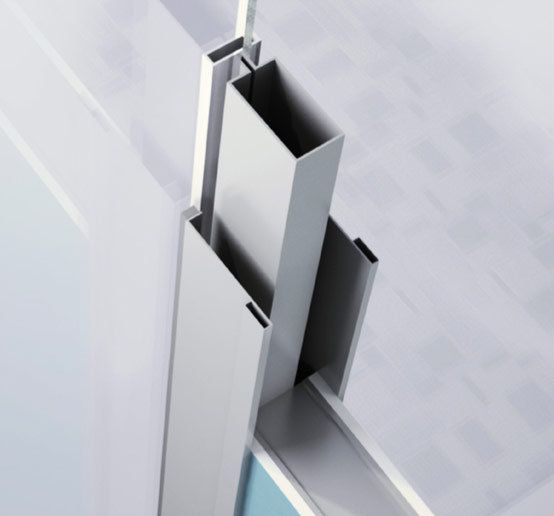
When two or more windows share a larger wall opening, the pieces between those window units can become part of the structural design.
That connecting member is commonly called a mullion.
For a Florida impact-window project, a mullion should not be treated as decorative trim. It can be part of the tested and approved load path that transfers wind forces from the window assemblies back to the building.
What is a window mullion?
A mullion is a structural member used to connect or separate adjacent window or door units within a larger opening.
Examples include:
- Two single-hung windows side by side
- A fixed picture window next to a casement
- A three-unit window combination
- Bay or bow-style configurations
- Window assemblies stacked vertically
The mullion helps the combined system resist loads between the individual units.
Can a mullion have its own Florida Product Approval?
Yes.
The Florida Product Approval database includes a Mullions subcategory, and current product records can list impact-rated mullion systems separately from the windows themselves.
PGT’s current technical-resource library also publishes separate mullion certifications for certain aluminum and vinyl product families.
That means the window approval alone may not answer every question about a combined opening.
Why does the mullion matter for design pressure?
A single approved window and a mulled group are not structurally identical configurations.
The mullion can have its own:
- Maximum span
- Design-pressure table
- Anchor requirements
- Reinforcement
- End conditions
- Connection details
- Substrate requirements
- Product compatibility
A larger opening may therefore require a particular mullion size or reinforcement even when each individual window is approved.
Our design pressure guide explains why opening size and configuration affect pressure capacity.
What should appear in the product documentation?
For a mulled opening, verify:
- The exact window series
- The exact mullion system
- The applicable product approval
- Compatibility between the windows and mullion
- Approved maximum dimensions
- Positive and negative pressure capacity
- Mullion reinforcement where required
- End-anchor details
- Substrate requirements
- Installation conditions
Do not assume a contractor can substitute any aluminum tube between two approved windows.
What is a clipped mullion?
A clipped mullion uses structural clips or connection components to connect the mullion into the surrounding system.
Manufacturers may publish different configurations such as:
- 1X mullions
- 2X mullions
- Bay mullions
- Reinforced mullions
- Aluminum or vinyl-compatible mullion systems
The names are manufacturer-specific.
The safe approach is to use the exact approval and drawing rather than relying on a generic description.
Does a mullion reduce the view?
It can.
A structural mullion adds a frame line inside the overall opening.
That can affect:
- Sightlines
- Natural light
- Alignment with furniture
- Exterior appearance
- HOA architectural review
Before ordering, review the elevation or shop drawing so you know where the mullion will appear.
For rooms where an uninterrupted view is a priority, an approved large fixed window may sometimes be an alternative if the product size and pressure limits support it.
Can an existing mullion be reused?
Do not assume so.
An older mullion may not be approved for the new product series, required pressure, anchor condition or opening configuration.
A replacement project should verify whether:
- The mullion remains
- The mullion is replaced
- The opening becomes one larger unit
- Structural modifications are required
That decision belongs in the project scope before the windows are ordered.
What happens during permitting?
Depending on the jurisdiction, permit documents can identify mullions in the opening schedule or product-approval package.
Miami-Dade’s current window and door guidance, for example, asks for mullion information where applicable.
The building department may need to see enough documentation to verify that the complete opening assembly matches an approved condition.
Frequently asked questions
Is a window mullion structural?
In many combined impact-window configurations, yes. The exact role depends on the approved system.
Does the mullion need a separate approval?
It can. Florida’s approval database includes mullion products, and manufacturers publish separate mullion certifications for some systems.
Can two approved windows simply be installed next to each other?
Not automatically. The connection between them, anchorage and overall configuration must follow an approved installation condition.
Can a mullion be removed to create a bigger view?
Possibly, but that can change the structural opening and product configuration. The replacement should be engineered and permitted as required.
Authoritative sources
- Florida Building Commission — Product Approval Search
- Florida Product Approval — example impact mullion approval
- PGT Windows & Doors — Technical Resources and Mullion Certifications
- Miami-Dade County — Windows, Shutters, Doors and Security Bars
The bottom line
A mullion is not filler between two windows. In many Florida impact-window systems, it is part of the structural assembly and needs to match the approved product, pressure, anchorage and opening configuration.
AA Glass & Windows can help review mulled openings and product documentation before ordering. Request a free estimate to discuss your project.