If you live in a Florida community with a homeowners association or condominium association, replacing windows can involve two separate approval systems: association review and government permitting. Homeowners often assume that an HOA can simply say no to impact windows because the exterior appearance is controlled by the community. Florida’s current hurricane-protection statutes make the situation more specific.
For many Florida HOA communities governed by Chapter 720, an association must adopt hurricane-protection specifications, and it may not deny an application for hurricane protection that conforms to those specifications. The statute expressly includes impact-resistant windows and doors within the meaning of hurricane protection.
Condominiums are governed by a different chapter of Florida law. Under the current Condominium Act, condominium boards also must adopt hurricane-protection specifications, and when association approval is required, a board may not refuse a unit owner’s installation or replacement of hurricane protection that conforms to those specifications. However, condominium declarations can create additional questions about who owns, maintains, repairs, or replaces exterior windows and doors.
This guide explains the practical difference between HOA approval, condo approval, building permits, product approvals, and project documentation under the 2026 Florida Statutes.
Important: This article is general educational information, not legal advice. Association declarations, bylaws, architectural guidelines, property ownership, responsibility for exterior components, local permit requirements, and project facts can vary. Review your governing documents and seek qualified legal advice if you have a dispute with an association.
Quick answer: can a Florida HOA deny impact windows?
For a homeowners association governed by Chapter 720, Florida Statute 720.3035(6) says the board or architectural committee must adopt hurricane-protection specifications for structures or improvements governed by the association. Those specifications may address factors such as color and style, but they must comply with the applicable building code.
The same subsection says the association may not deny an application for the installation, enhancement, or replacement of hurricane protection when the proposed work conforms to the adopted specifications. The statute specifically lists impact-resistant windows and doors as hurricane protection.
That does not mean an owner can skip the association process. It means the review has legal boundaries. An association can still require a conforming exterior appearance and can review the project under valid architectural standards.
For condominiums, Florida Statute 718.113(5) creates a similar protection for a unit owner’s conforming hurricane-protection installation when approval is required, but condominium ownership and maintenance responsibilities can be more complex.
Florida law separates HOAs and condominium associations
The phrase “HOA” is often used casually for every community association, but Florida law treats homeowners associations and condominium associations differently.
Chapter 720 homeowners associations
A Chapter 720 association commonly governs single-family homes, villas, or townhome-style parcels where the owner owns the parcel and the association enforces recorded covenants.
For hurricane protection, current section 720.3035 requires association specifications and prevents denial of a conforming application.
Chapter 718 condominium associations
A condominium is governed by Chapter 718. Exterior windows and doors may be part of the unit, common elements, or limited common elements depending on the recorded declaration and the specific building.
Section 718.113 addresses hurricane protection and also ties responsibility for maintenance, repair, and replacement to the declaration in important circumstances.
If you live in a condo, do not assume that the approval process for a detached home in an HOA applies to your unit.
What can a Florida HOA regulate about impact windows?
Florida law protects hurricane-protection installations, but it does not eliminate architectural review.
Under section 720.3035, an association’s hurricane-protection specifications may include color and style and other factors the board considers relevant, provided the specifications comply with the applicable building code. The association may also require compliance with an existing unified building scheme for the exterior appearance of the property.
In practical terms, an HOA may have legitimate standards involving matters such as:
- Frame color or exterior finish
- Window operating style where exterior appearance changes
- Grid or muntin appearance
- Exterior trim appearance
- Door style or finish
- Visual consistency with an established building scheme
- The form and documentation required for architectural review
The exact authority comes from the governing documents, published standards authorized by those documents, and Florida law. Homeowners should request the current written specifications rather than relying only on an informal statement from a neighbor or board member.
Florida law also limits architectural-review authority
Section 720.3035 contains broader architectural-control rules that are useful when planning an impact-window project.
The statute says an association’s authority to review the location, size, type, or appearance of an improvement must be specifically stated or reasonably inferred from the declaration or authorized published guidelines. It also requires architectural standards to be applied reasonably and equitably.
If an architectural request is denied, the association or committee must provide written notice stating the specific rule or covenant relied upon and the specific part of the proposed improvement that does not conform.
The statute also says a Chapter 720 association may not require a government building permit to be issued as a prerequisite for the association’s own review of a proposed improvement.
That last point is especially useful for project sequencing: HOA review and building-department review are separate processes, and Florida law does not allow a Chapter 720 association to make issuance of the government permit a prerequisite to its architectural review.
Can an HOA require a specific window color or style?
A Florida HOA can adopt hurricane-protection specifications that address color and style, and it can require a homeowner to follow an existing unified exterior building scheme.
That means a homeowner should not order custom windows based only on the assumption that “impact windows are protected by Florida law.” The right to install hurricane protection does not automatically create a right to choose any visible frame color, grid pattern, or exterior configuration.
Before a custom order is released, confirm the association’s current written specifications and obtain the required approval in writing when the governing documents require it.
This is particularly important because changing a product after manufacture can affect cost, lead time, product configuration, and permit documents.
What about condominium impact windows?
Florida’s condominium law uses a similar concept but adds responsibility questions that can materially change the project.
Under section 718.113(5), each board of a residential or mixed-use condominium must adopt hurricane-protection specifications for each building it operates. The specifications may include color, style, and other relevant factors and must comply with the applicable building code.
If the condominium documents require approval, the board may not refuse a unit owner’s installation or replacement of hurricane protection that conforms to the board’s specifications. The board may still require adherence to an existing unified building scheme regarding exterior appearance.
The same statute also addresses circumstances in which the association may install or require hurricane protection and circumstances in which the declaration determines responsibility for exterior windows, doors, or other apertures.
For a condo owner, the first questions should therefore be:
- Does the declaration make the unit owner or association responsible for the exterior windows and doors?
- Has the board adopted current hurricane-protection specifications?
- Is individual unit-owner replacement allowed under those specifications?
- What product, color, style, glazing, and contractor documents are required for review?
- Are there building-specific installation, access, elevator, insurance, or work-hour rules?
A condo project can be technically code-compliant and still require association coordination because the exterior envelope and common elements affect the entire building.
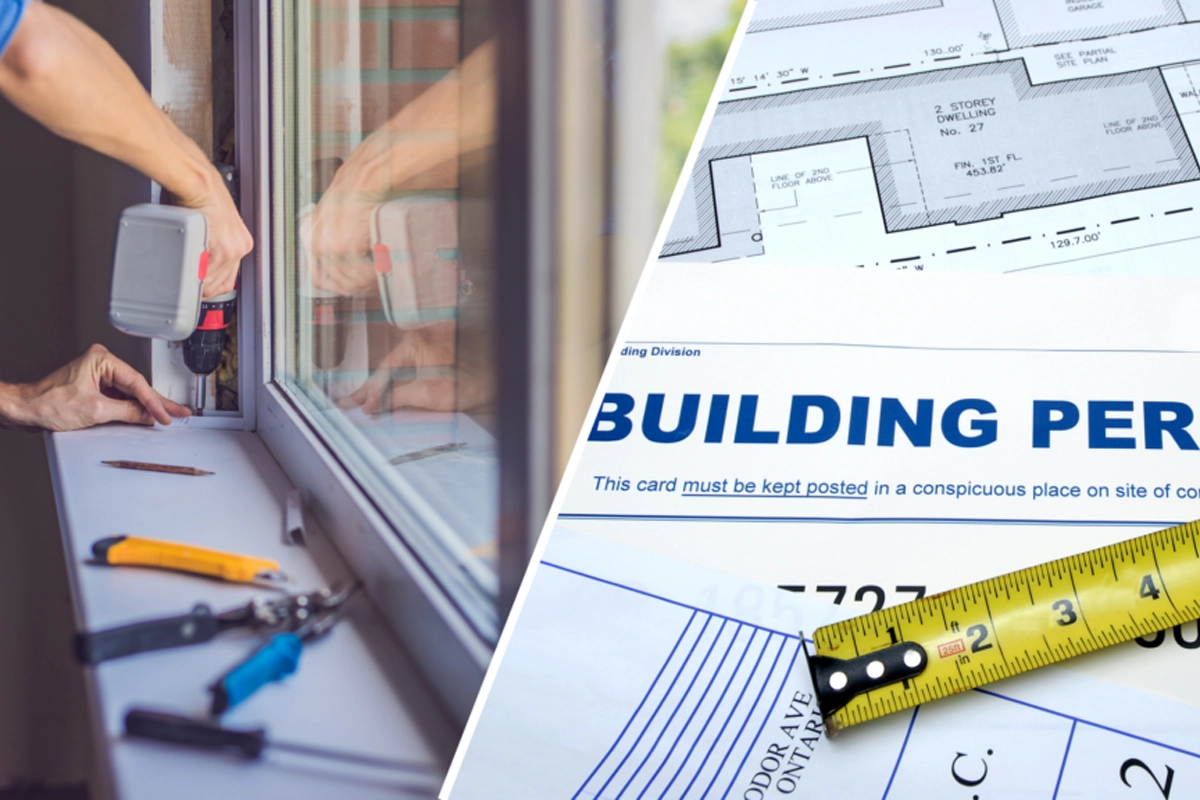
HOA approval is not the same as a building permit
Association approval and a building permit answer different questions.
An HOA or condo association generally reviews the project under private governing documents, architectural standards, and community rules. A city or county building department reviews the work under the applicable building code and permit requirements.
An association approval does not replace a government permit when a permit is required. Likewise, a permit does not automatically resolve a separate association-approval obligation in the governing documents.
Miami-Dade County’s current windows-and-doors permitting guidance, for example, requires product-approval information for replacement windows and doors and accepts applicable Florida Building Commission approvals. The project documentation can include product approval numbers, sizes, and other technical information needed for plan review.
Our impact window installation guide explains how final measurements, product selection, permits, ordering, installation, inspections, and closeout fit together.
Product approval still matters after HOA approval
An HOA approval based on appearance does not establish that the selected window is approved for the actual building location and opening conditions.
Florida’s statewide Product Approval system lets contractors, design professionals, officials, and homeowners review the exact product approval record. Depending on the product, the record can identify the code version, impact status, design-pressure limits, installation details, and whether the product is approved for use in the High-Velocity Hurricane Zone.
Before ordering, ask for the exact manufacturer, series, configuration, and approval number. Then verify that the proposed assembly is appropriate for the project rather than relying only on the brand name.
Our guide to Florida Product Approval explains how to review FL numbers, impact status, HVHZ fields, design pressures, and installation limitations.
A practical HOA or condo approval package
The exact submission requirements come from the association’s documents, but a well-organized package often makes review easier.
Depending on the community, useful project information can include:
- Owner name and property address
- Contractor information
- Manufacturer and product series
- Florida Product Approval or Miami-Dade NOA information, when applicable
- Window and door schedule
- Proposed frame color and finish
- Exterior elevations or photos showing the affected openings
- Product brochures or specification sheets
- Proposed installation scope
- Requested work dates or schedule information
- Any association-specific architectural application
Do not submit documents that describe a different product than the one you intend to order. If the product, color, or configuration changes after approval, ask whether the association requires a revised submission before installation.
Should you get association approval before ordering the windows?
For custom or made-to-order products, obtaining required association approval before the final order is generally the safer project-planning sequence.
The reason is practical rather than legal: an association may have valid exterior specifications that affect frame color, style, grids, or other visible features. Ordering first can create unnecessary change orders or delays if the approved configuration is different from the original selection.
A useful sequence is:
- Review the declaration and current architectural/hurricane-protection specifications.
- Measure the openings and select a proposed product configuration.
- Prepare the association submission.
- Obtain required association approval.
- Complete project-specific permit and engineering documentation.
- Confirm the final approved product before ordering.
- Schedule installation and required inspections.
The exact order can vary by project and jurisdiction, so coordinate the association, contractor, and permit requirements before committing to a final schedule.
What if the HOA has not adopted hurricane-protection specifications?
Section 720.3035 says the board or architectural committee must adopt hurricane-protection specifications for structures or improvements governed by the association. Section 718.113 contains a corresponding requirement for residential and mixed-use condominium boards.
If your association does not have written specifications available, request them in writing before assuming that no approval rules apply. A missing or outdated association process can create a legal question that depends on the governing documents and the facts of the community.
If a dispute develops, a Florida attorney experienced in community-association law can review the declaration, published standards, board action, and current statute.
What if your HOA denies the application?
A denial does not automatically mean the association acted improperly. A proposed window may genuinely conflict with valid specifications for color, style, or an established exterior scheme.
For a Chapter 720 HOA, current law requires a denial of an architectural request to identify the specific rule or covenant relied upon and the specific part of the proposed improvement that does not conform.
If your impact-window application is denied, ask for:
- The written denial
- The exact covenant, rule, or specification cited
- The specific product feature that allegedly conflicts with the requirement
- The association’s current hurricane-protection specifications
- Any appeal or resubmission procedure in the governing documents
Then compare the denial with the current statute and association documents. If the proposed hurricane protection conforms to the adopted specifications but the association still refuses approval, consider obtaining legal advice before proceeding with construction.
Questions to ask before replacing windows in an HOA or condo
Use this checklist before signing the final product order:
- Is my property governed by Chapter 720, Chapter 718, or another ownership structure?
- Who is responsible for the windows and exterior doors under the governing documents?
- Does the association have written hurricane-protection specifications?
- What frame colors and exterior styles are permitted?
- Is an architectural application required before ordering?
- What product documentation does the association want?
- Does the exact proposed product have the appropriate Florida approval or NOA?
- Who is responsible for the building permit and inspections?
- Are there condo access, elevator, insurance, or work-hour requirements?
- What happens if the product configuration changes after association approval?
- What written closeout documentation will I receive after final inspection?
If you are still comparing contractors, our guide to choosing an impact window company explains what to verify in the proposal, licensing, product documentation, permit scope, and warranties.
Frequently asked questions
Can a Florida HOA ban impact windows?
A Chapter 720 HOA may not deny an application for hurricane protection that conforms to the association’s adopted hurricane-protection specifications. Florida law expressly includes impact-resistant windows and doors as hurricane protection. The association can still regulate valid exterior appearance requirements such as color or style through its specifications and unified building scheme.
Can a Florida condo board stop a unit owner from installing impact windows?
When condominium approval is required, section 718.113 says the board may not refuse a unit owner’s installation or replacement of hurricane protection that conforms to the board’s adopted specifications. However, the condominium declaration can affect who is responsible for exterior windows and doors, and building-specific rules may apply.
Does HOA approval mean I can install the windows without a permit?
No. Association approval and government permitting are separate. A city or county may require a building permit, product approvals, inspections, and project-specific documentation even after the association has approved the exterior appearance.
Can an HOA control the color of impact windows?
Yes. Florida’s HOA hurricane-protection statute expressly allows specifications to include color and style, and the association may require adherence to an existing unified exterior building scheme.
Can an HOA make me get the building permit before it reviews my application?
For a Chapter 720 homeowners association, section 720.3035 says the association or architectural committee may not require issuance of a government building permit as a prerequisite to the association’s review of the proposed improvement.
Are impact windows automatically approved because they have an FL number?
No. A Florida Product Approval relates to building-code product evaluation. The exact product must still be appropriate for the opening and project conditions, and an association may separately review exterior appearance under valid specifications.
Official sources
This guide relies on current primary sources available on September 2, 2026:
- Florida Statutes §720.3035 — Architectural control covenants; hurricane protection: https://www.flsenate.gov/Laws/Statutes/2026/720.3035
- Florida Statutes §718.113 — Condominium hurricane protection: https://www.flsenate.gov/Laws/Statutes/2026/718.113
- Florida Building Commission Product Approval Search: https://www.floridabuilding.org/pr/pr_app_srch.aspx
- Miami-Dade County Windows, Shutters, Doors and Security Bars permitting guidance: https://www.miamidade.gov/global/economy/building/windows-shutters-doors.page
The bottom line
Florida law gives hurricane protection special treatment in both homeowners associations and condominiums. A Chapter 720 HOA cannot deny a conforming hurricane-protection application, and impact-resistant windows and doors are expressly included in the statute. Condominium law provides a similar protection for conforming installations, while also requiring owners to account for the declaration, building responsibilities, and common-element rules.
The safest project approach is to treat association approval, product approval, and building permits as separate checkpoints. Verify the governing documents, obtain the current hurricane-protection specifications, select the exact approved product, complete required association review, and coordinate the permit and inspection process before installation begins.
AA Glass & Windows can help homeowners and property managers review impact-window and impact-door options, product documentation, project scope, and installation planning. Request a free estimate to discuss your property and the openings you want to upgrade.