If you bought a Florida home with newer windows, inherited paperwork you do not fully understand, or simply want to know what is already installed before hurricane season, you may be asking a common question: how can I tell if my windows are impact resistant?
The most reliable answer does not come from tapping the glass, checking whether it looks thick, or assuming that every double-pane window is impact rated. Impact performance is tied to the tested and approved window assembly, including the glass, frame, hardware, size, anchoring requirements, and product approval.
Fortunately, there are several practical ways to verify what you have. Start with the markings on the window, then work through product approval records, permit documents, manufacturer information, and professional inspection if needed.
Quick answer: the best ways to identify impact windows
For a Florida homeowner, the strongest verification usually comes from a combination of the following:
- Permanent manufacturer markings or labels on the window or frame.
- A Florida Product Approval number or Miami-Dade Notice of Acceptance (NOA) connected to the exact model or series.
- Permit, inspection, contract, or installation records showing what was installed.
- Manufacturer documentation confirming the model, glass package, and impact rating.
- Professional verification when labels or records are missing or unclear.
The important word is exact. A manufacturer may sell both impact and non-impact versions of similar-looking windows, so identifying only the brand is not enough.
Why appearance alone is not reliable
Impact windows can look very similar to conventional windows. Modern products may use aluminum or vinyl frames, clear or tinted glass, single-hung or sliding operation, and many of the same architectural styles found in non-impact products.
Some visual clues can be useful, but they are not proof by themselves.
| What you notice | What it may suggest | Why it is not enough alone |
|---|---|---|
| Thick-looking glass | Laminated or insulated construction | Thickness does not identify the complete tested assembly |
| Two panes of glass | Insulated glass unit | Double-pane does not automatically mean impact resistant |
| Small etched glass mark | Manufacturer or glazing information | It may identify the glass, not the full window approval |
| Heavy frame | Stronger product construction | Non-impact products can also have substantial frames |
| New-looking window | Recent replacement | New windows are not automatically impact rated |
| Hurricane or storm marketing language | Product may be designed for storm conditions | The exact model and approval still need verification |
If you need documentation for a permit, insurance review, property sale, or renovation, use product records rather than appearance alone.
1. Look for a permanent label, marking, or etching
The 2023 Florida Building Code, Residential, Eighth Edition requires exterior windows and doors covered by its testing and labeling provisions to have a permanent label, marking, or etching that provides traceability to the manufacturer and product.
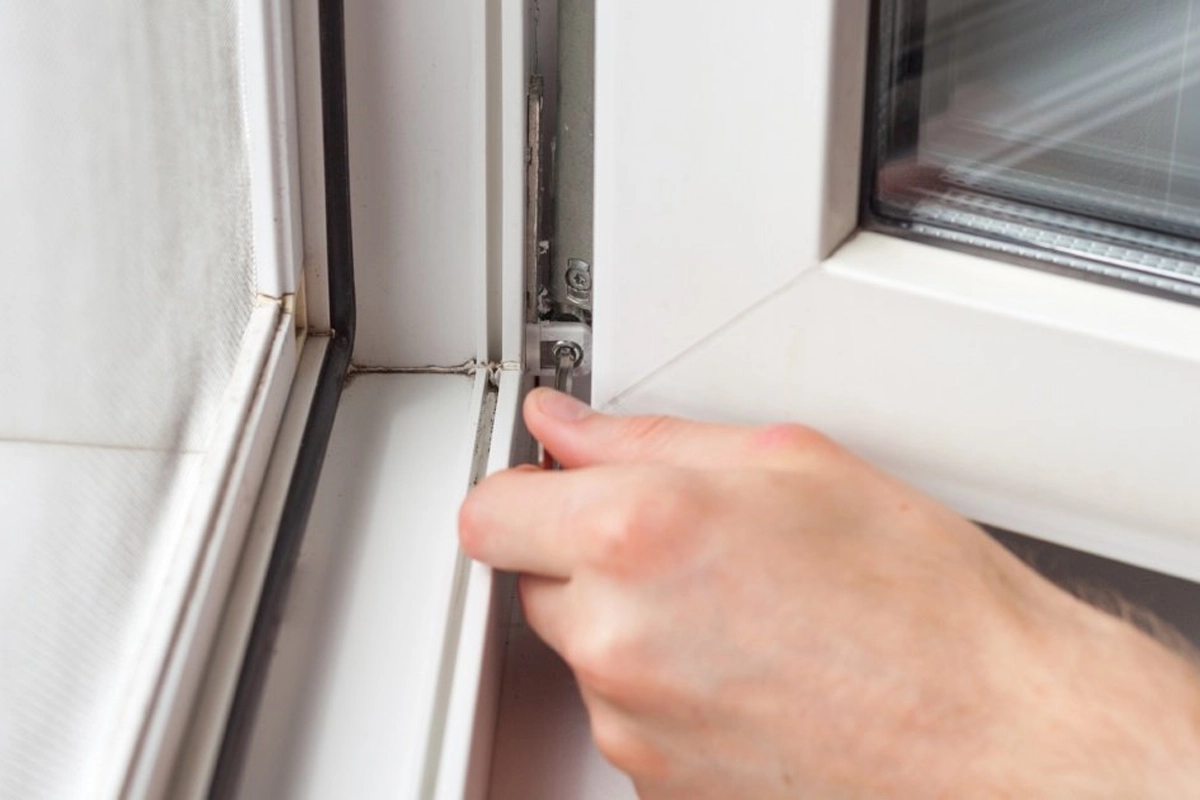
Start by inspecting accessible areas of the frame and sash. Depending on the manufacturer and window type, identifying information may be found:
- Along the side or top of an operable sash
- Inside the frame channel
- Near locks or operating hardware
- On a fixed frame member
- On a permanent certification label
- As a marking or etching associated with the product
You are looking for details such as a manufacturer name, model or series, certification information, or other identifying code.
Do not remove glazing beads, disassemble hardware, or force open parts of the window just to find a label. If the information is not accessible during normal operation, move to the documentation steps below.
2. Understand the temporary supplemental label
Florida’s current residential code also requires additional product information either on a permanent label or on a temporary supplemental label applied by the manufacturer.
That information includes items such as:
- Manufacturer
- Product model or series
- Positive and negative design pressure rating
- Maximum tested product size
- Impact-resistance rating, when applicable
- Florida Product Approval number or Miami-Dade product approval number, when applicable
- Applicable test standards
- Approved certification, testing, evaluation, or product-approval entity
The temporary supplemental label is intended to remain on the window through final approval by the building official. That means a homeowner inspecting a completed project years later may not find that temporary sticker anymore.
If you still have installation photos, warranty packets, permit paperwork, or a contractor handoff folder, check them for a photo or copy of the label.
3. Find the manufacturer and exact model or series
Once you find identifying information, write it down exactly. A small difference in model or series can matter.
For example, a manufacturer may offer:
- Impact and non-impact versions of the same general window style
- Different size limits
- Different glass configurations
- Different approvals for High-Velocity Hurricane Zone and non-HVHZ applications
- Different design-pressure ranges
This is why a brand name alone does not prove impact resistance.
If the label gives you a manufacturer and series but no clear impact designation, search the official product approval record next.
4. Search the Florida Product Approval database
Florida maintains an official Product Approval database where you can search approved building products.
The database allows searches using information such as:
- Florida approval number (FL number)
- Manufacturer
- Product model, number, or name
- Product description
- Whether the product is approved for use in the HVHZ
- Whether it is marked as impact resistant
This is one of the strongest ways to check a window model because the record can distinguish between products that are explicitly listed as Impact Resistant: Yes and similar products that are listed as non-impact.
When reviewing a record, do not stop at the product name. Check the limits of use, impact status, approval status, installation documents, and whether the approval applies to the location and configuration you are evaluating.
You can review the official Florida Building Code Product Approval search to look up an FL number or manufacturer/model information.
5. Check for a Miami-Dade Notice of Acceptance in South Florida
For properties in Miami-Dade County or projects involving High-Velocity Hurricane Zone requirements, a Miami-Dade Notice of Acceptance (NOA) may be an important part of the documentation.
Miami-Dade’s Product Control records identify approved products and can include the product description, impact classification, design pressures, approval scope, and expiration information.
If you find an NOA number in your permit package, installation documents, or window label information, compare that number with the official record and confirm it matches the manufacturer and product installed.
Miami-Dade also requires window and glass-door permit information to identify product approval numbers and the applicable NOAs for replacement work. That makes old permit files especially useful when you are trying to identify windows already installed on a property.
For South Florida properties, review Miami-Dade’s official windows, shutters, doors, and product approval guidance.
6. Pull the permit record for the installation
If your windows were professionally replaced under a permit, the permit record may be easier to verify than the physical labels.
Useful documents can include:
- Building permit application
- Product approval sheets
- NOA documents
- Window schedule
- Elevation drawings
- Inspection records
- Contractor proposal or final invoice
- Manufacturer order confirmation
Look for the manufacturer, model or series, FL number or NOA number, glass selection, and opening sizes.
For a recently purchased home, ask the seller, previous owner, property manager, HOA, condo association, or local building department whether replacement-window permit documents are available.
7. Check the glass marking, but do not rely on it by itself
You may see a small permanent mark, logo, code, or etching in a corner of the glass. This is sometimes called a glass “bug.”
That marking can be useful because it may identify the glass manufacturer, safety-glazing standard, or other glazing information. Florida’s building code also contains identification requirements for glass and safety glazing.
However, the glass mark alone should not be treated as proof that the complete window assembly is impact rated.
Impact performance depends on the tested assembly. The correct glass installed in an unapproved frame, an oversized opening, or a configuration outside the product approval’s limits of use is not the same as verifying an approved impact window system.
Use the glass marking as a clue that helps you identify the product, then confirm the complete window through approval or permit documentation.
8. Do not assume double-pane means impact resistant
This is one of the most common homeowner misconceptions.
A double-pane or insulated glass unit can improve thermal performance, but the number of panes does not determine whether a window is impact resistant. Impact and energy performance are separate characteristics.
An impact window may use laminated glass as part of a single- or multi-layer glazing configuration, depending on the product. A non-impact window may also use insulated glass.
If your goal is hurricane protection, verify the impact rating and approval of the exact window assembly, not just whether it has two panes.
9. Do not use a “tap test” or break test
Online advice sometimes suggests tapping on glass, listening to the sound, using reflections, or trying to judge how flexible the glass feels.
Those methods are not reliable enough for meaningful verification, and attempting to damage or stress a window is obviously a bad idea.
A window can have laminated glass without giving you enough information to confirm the exact assembly, approval, size limits, anchoring, or design pressures.
Documentation beats guessing.
10. Confirm the entire assembly, not just the glass
A hurricane-rated impact window is not simply a sheet of special glass placed into any frame.
The complete system matters, including:
- Glass construction
- Frame material and profile
- Sash or panel configuration
- Locks and hardware
- Mullions when used
- Maximum tested size
- Design pressures
- Anchoring pattern
- Fastener type
- Substrate conditions
- Installation method
Florida Product Approval records commonly provide installation instructions and limits of use for exactly this reason.
If you are planning to replace windows, AA Glass & Windows’ impact window service and window catalog can help you compare current product styles and options.
11. What if the labels are painted over, missing, or unreadable?
Older windows, renovations, paint, wear, or previous repairs can make labels difficult to read. If that happens, work backward from the property records.
Try this order:
- Search your permit history for window or door replacement permits.
- Find the contractor proposal, invoice, or warranty packet.
- Look for FL approval or Miami-Dade NOA numbers in those records.
- Match the number to the official product database.
- Confirm the manufacturer, model, size, impact status, and limits of use.
- If the records still do not resolve the question, schedule a professional inspection.
A qualified window professional may be able to identify frame details, glass markings, hardware, series characteristics, and installation conditions that are difficult for a homeowner to interpret.
12. Why verification matters before buying shutters
If you are considering hurricane shutters because you are not sure whether your windows are impact rated, verify the existing windows first.
You may discover that some openings already have approved impact systems while others do not. A mixed property is possible, especially when improvements were completed in phases.
Knowing what is actually installed helps you avoid making a protection decision based on assumptions. For a broader comparison, read impact windows vs. hurricane shutters for Florida homes.
13. Why verification matters when buying a Florida home
When evaluating a home advertised as having “hurricane windows” or “impact glass,” ask for documentation rather than relying only on the listing description.
Useful records include:
- Permit number
- Installation date
- Manufacturer and series
- Product approval or NOA number
- Contractor invoice
- Final inspection record
- Warranty information
This documentation can help you understand what was installed and can be useful later if you renovate, replace a damaged unit, or need product information for another purpose.
A simple homeowner checklist
Use this checklist if you are standing in front of an existing window and want to know what to do next:
- Check the frame and sash for permanent manufacturer markings.
- Photograph any labels, etchings, logos, or serial/model information.
- Look for an FL Product Approval number or Miami-Dade NOA number.
- Search the exact number in the official approval database.
- Confirm the record says the exact product is impact resistant when applicable.
- Compare manufacturer, series, and size/configuration details.
- Review permit and installation documents.
- Do not rely on pane count, tint, thickness, or appearance alone.
- Get professional verification if the evidence is incomplete.
The bottom line
The best way to tell whether your windows are impact resistant is to identify the exact product and verify its approval or installation documentation.
Start with permanent labels and markings, then use the Florida Product Approval database, Miami-Dade NOA records when applicable, and your permit or contractor documents. Treat visual clues such as thick glass, double panes, tint, or heavy frames as clues—not proof.
If your existing windows cannot be verified, are aging, or no longer fit your hurricane-protection goals, AA Glass & Windows can help you review the openings and compare replacement options. Request a free estimate to discuss impact windows for your Florida property.