Yes, impact windows can help reduce outside noise, but they are not automatically “soundproof.”
That distinction matters for Florida homeowners living near busy roads, airports, schools, nightlife, construction, rail corridors, or dense urban neighborhoods. Impact windows are designed primarily for hurricane and windborne-debris protection, yet the same laminated-glass construction used in many impact systems can also improve sound control compared with older or less sophisticated window assemblies.
The amount of noise reduction depends on the complete window system, not simply on the word impact in the product name.
Glass thickness, laminated interlayers, insulated glass, air space, frame design, seals, window style, installation quality, and the frequencies of the outside noise all influence the result.
The short answer
If you are replacing older single-pane or poorly sealed windows, a well-selected impact-window system can make a noticeable difference in everyday exterior noise.
However, the exact improvement varies by product and property. One impact window may perform much better acoustically than another, even if both meet the required hurricane-performance criteria.
If noise reduction is important to you, ask for the acoustic rating of the exact window configuration being proposed rather than assuming all impact windows perform the same way.
The two ratings you are most likely to encounter are:
- STC — Sound Transmission Class
- OITC — Outdoor-Indoor Transmission Class
For exterior windows exposed to traffic, aircraft, and other outdoor noise, OITC is especially useful because it is intended to evaluate how exterior building components reduce outdoor sound entering an interior space.
Why impact windows can reduce outside noise
Most impact-window systems use laminated glass as part of the glazing package. Laminated glass is made by bonding glass layers around an interlayer.
That interlayer is critical for impact performance because it helps hold broken glass together after a severe impact. It can also help damp vibration and reduce sound transmission.
The National Glass Association notes that laminated and insulating glass configurations can improve sound-transmission performance, while the Fenestration and Glazing Industry Alliance identifies both STC and OITC as established ways to classify acoustic performance for fenestration products.
That does not mean every laminated product will deliver the same acoustic result. The glass makeup, thickness, interlayer, air space, frame, seals, and complete assembly still matter.
Impact windows are not the same as soundproof windows
The phrase “soundproof window” is often used in marketing, but no residential window should be assumed to eliminate all exterior sound.
A better goal is sound reduction.
A high-performing window can lower the amount of sound energy entering the room, but the homeowner may still hear low-frequency trucks, aircraft, horns, music, or nearby activity.
The rest of the building envelope matters too. Noise can enter through:
- Exterior doors
- Sliding glass doors
- Walls
- Roof assemblies
- Vents
- Gaps around frames
- Poorly sealed penetrations
- Older or mismatched openings
A quieter home usually comes from improving the weakest parts of the exterior envelope rather than expecting one window to solve every noise problem.
What STC means
Sound Transmission Class, or STC, is a single-number rating used to describe how effectively a building component reduces airborne sound transmission across a defined frequency range.
In general, a higher STC rating indicates better sound isolation.
STC is commonly used for interior partitions, doors, walls, and glazing systems. It can still be useful when comparing windows, especially when a manufacturer provides both STC and OITC data.
But exterior environmental noise often contains lower-frequency energy that is not represented as strongly by STC.
That is why homeowners comparing windows for traffic or aircraft noise should also look at OITC.
What OITC means
Outdoor-Indoor Transmission Class, or OITC, is designed specifically to evaluate exterior building components exposed to outdoor noise.
The U.S. General Services Administration uses OITC criteria when addressing building-facade sound isolation, and industry guidance from FGIA distinguishes OITC from STC for exterior fenestration applications.
That makes OITC especially relevant when the noise problem comes from sources such as:
- Highway traffic
- Urban roads
- Aircraft
- Rail activity
- Construction equipment
- Outdoor mechanical equipment
- Dense commercial areas
Just like STC, a higher OITC rating generally indicates better sound isolation.
When comparing two impact-window packages for the same home, the OITC value can be one of the most useful specifications to request if exterior noise is a major concern.
Laminated glass can help damp vibration
One reason impact windows often perform better acoustically than older standard windows is the laminated-glass interlayer.
Sound moves through glazing by causing the glass to vibrate. Laminated glass can help damp some of that vibration because the interlayer changes how the glass layers respond to sound energy.
The exact result depends on the construction.
Different laminated configurations may use different:
- Glass thicknesses
- Interlayer thicknesses
- Interlayer materials
- Symmetrical or asymmetrical glass makeups
- Insulated-glass configurations
- Air-space widths
The National Glass Association’s glazing guidance shows that laminated and insulating configurations can produce higher acoustic ratings, but it also emphasizes that the full glazing system should be evaluated rather than judging performance from one material alone.
Does double-pane impact glass reduce more noise?
Sometimes, but double pane does not automatically mean quieter.
An insulated glass unit can improve acoustic performance because the additional glazing layer and sealed air space change how sound passes through the assembly.
However, the details matter.
Two pieces of glass with identical thicknesses can have acoustic weaknesses at similar frequencies. In some cases, using different glass thicknesses or a carefully selected laminated configuration can provide better results than simply adding another pane.
If sound control matters, compare the tested acoustic rating of the exact product rather than relying on descriptions such as:
- Double pane
- Insulated
- Laminated
- Hurricane rated
- Premium glass
Those terms describe construction features, but they do not replace an STC or OITC rating.
Frame and seal quality matter too
Sound does not only travel through the center of the glass.
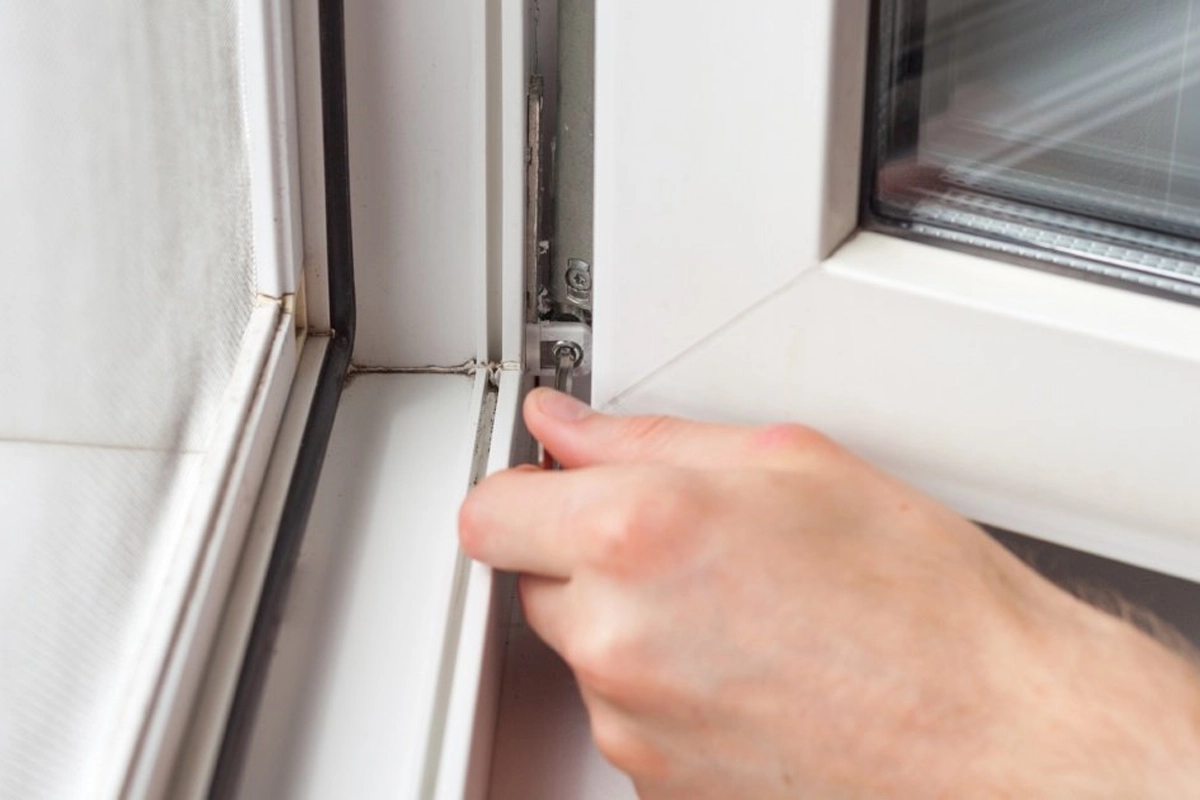
The frame, sash, weatherstripping, locks, seals, and perimeter installation all affect how much outside noise reaches the interior.
A high-performing glass package installed in a window with poor seals can underperform.
Older windows often develop conditions such as:
- Worn weatherstripping
- Loose sashes
- Cracked perimeter sealant
- Frame deterioration
- Gaps around the opening
- Poor locking pressure
Replacing a deteriorated window with a properly installed modern impact system can improve sound control partly because the new assembly may seal the opening more effectively.
That is also why installation quality matters just as much as product selection.
AA Glass & Windows’ impact window service explains the available window systems and project-planning process for Florida homes.
Window style can affect acoustic performance
Different operating styles can seal differently.
For example, some casement systems use compression seals when the sash is locked, while sliding or single-hung systems use different weatherstripping and operating mechanisms.
That does not mean one style is always acoustically superior. Product design varies significantly between manufacturers and series.
The better approach is to compare the tested rating for the exact style you are considering.
AA Glass & Windows’ windows catalog includes multiple impact-window families, allowing homeowners to compare styles and configurations before making a final selection.
What kinds of noise can impact windows help with?
A properly selected impact-window system may help reduce many common exterior noises, including:
- Road traffic
- Motorcycles
- Lawn equipment
- Neighborhood activity
- Dogs barking
- Outdoor conversations
- Construction activity
- Music from nearby businesses
- Aircraft or helicopter noise
- General urban background noise
The amount of improvement will differ by frequency.
Low-frequency sounds, such as heavy trucks, bass, aircraft, or large mechanical equipment, are often harder to control than higher-frequency sounds.
That is another reason a generic promise such as “blocks 90% of noise” should be treated carefully unless it is supported by a specific tested configuration and a clear explanation of what the percentage means.
Why this matters in South Florida
Noise control can be especially valuable in dense Florida markets where homes, condos, roads, airports, and commercial activity are close together.
A homeowner near Miami International Airport has a different acoustic problem from a homeowner on a residential street in Cape Coral. A condo near a busy arterial road has different exposure from a house facing a canal or neighborhood park.
The best window configuration depends on the dominant sound source and how the building is constructed.
For homeowners in Miami-Dade, Broward, Palm Beach, Southwest Florida, the Treasure Coast, Central Florida, and the Florida Keys, impact windows can provide a useful combination of hurricane protection and improved day-to-day comfort when the correct product is selected.
Noise reduction vs. energy efficiency
Acoustic and energy performance are separate considerations.
A window with a strong OITC rating is not automatically the most energy-efficient option, and a low-SHGC window is not automatically the best acoustic performer.
Fortunately, many modern impact-window systems can be configured to address both goals.
If heat gain and cooling performance are also priorities, review our guide on whether impact windows are energy efficient. That article explains U-factor, SHGC, Low-E coatings, insulated glass, and whole-window energy performance.
When comparing proposals, ask for both the acoustic and energy specifications of the exact glass package rather than assuming one feature guarantees the other.
Noise reduction vs. hurricane performance
Acoustic performance should never replace hurricane-performance review.
A Florida impact-window project still needs to consider:
- Product approval
- Impact rating
- Design pressures
- Opening size
- Installation instructions
- Anchoring
- Substrate conditions
- Permit requirements
- Applicable Florida Building Code provisions
The quietest glass package is not useful if it does not meet the structural and product-approval requirements for the opening.
Likewise, two products can both satisfy impact requirements while providing different acoustic performance.
The best selection balances the complete list of project needs.
What should you ask for before buying?
If outside noise is one of your reasons for replacing windows, ask the contractor or manufacturer for specific information.
Useful questions include:
- What is the STC rating of this exact window configuration?
- What is the OITC rating?
- Is the rating for the complete window assembly or only the glass?
- Does the unit use laminated glass, insulated glass, or both?
- What glass thicknesses are included?
- Is an acoustic interlayer available?
- Does another approved glass package offer better acoustic performance?
- How will the perimeter of the opening be sealed?
- Are my exterior doors or sliding glass doors likely to remain the weakest acoustic openings?
- Does this exact configuration still meet the required impact and design-pressure criteria for my project?
A detailed proposal should identify the manufacturer, series, glass makeup, product approval, and installation scope clearly enough for those questions to be answered.
Should you replace only the noisiest windows?
Sometimes a phased project can make sense.
If one side of the home faces a highway, school, commercial property, or other major noise source, replacing those openings first may provide a practical way to address the worst rooms before completing the rest of the home.
However, partial replacement can also leave significant sound paths through older windows and doors elsewhere.
The right approach depends on:
- Which rooms are most affected
- The direction of the noise source
- Existing window condition
- Budget
- Hurricane-protection priorities
- Whether doors and sliding glass openings also need replacement
For project budgeting, see our guide on what affects the cost of impact windows in Florida.
Can impact doors and sliding glass doors reduce noise too?
Yes, properly selected exterior doors and sliding glass doors can also contribute to better sound control.
Large glass doors can represent a significant portion of the exterior wall area, so leaving an older sliding door in place while replacing nearby windows may limit the overall acoustic improvement.
If your main noise source is near a patio, balcony, pool area, road-facing living room, or condo terrace, evaluate the door system at the same time as the windows.
The complete building envelope matters more than one product in isolation.
The bottom line
Impact windows can reduce outside noise, but they are not automatically soundproof.
Laminated glass, insulated glazing, glass thickness, air space, frame design, weatherstripping, window style, and installation quality all influence the final result.
For Florida homeowners dealing with traffic, aircraft, construction, nightlife, or general neighborhood noise, the most useful step is to compare the STC and OITC ratings of the exact impact-window configuration being proposed.
That allows you to evaluate noise control alongside hurricane protection, energy performance, appearance, and budget instead of relying on broad marketing claims.
AA Glass & Windows can help you compare impact-window styles, glass packages, product approvals, and project requirements for your property. Request an estimate to review options that balance hurricane protection with everyday comfort and noise reduction.