Moisture on or around a Florida window can mean several very different things.
A homeowner may describe all of them as “my impact window is fogging,” but surface condensation, moisture trapped between panes, clogged drainage, and actual water intrusion are not the same problem.
Before assuming an impact window has failed, identify where the moisture is located, when it appears, and whether it can be wiped from an exposed glass surface.
Why does condensation form on windows?
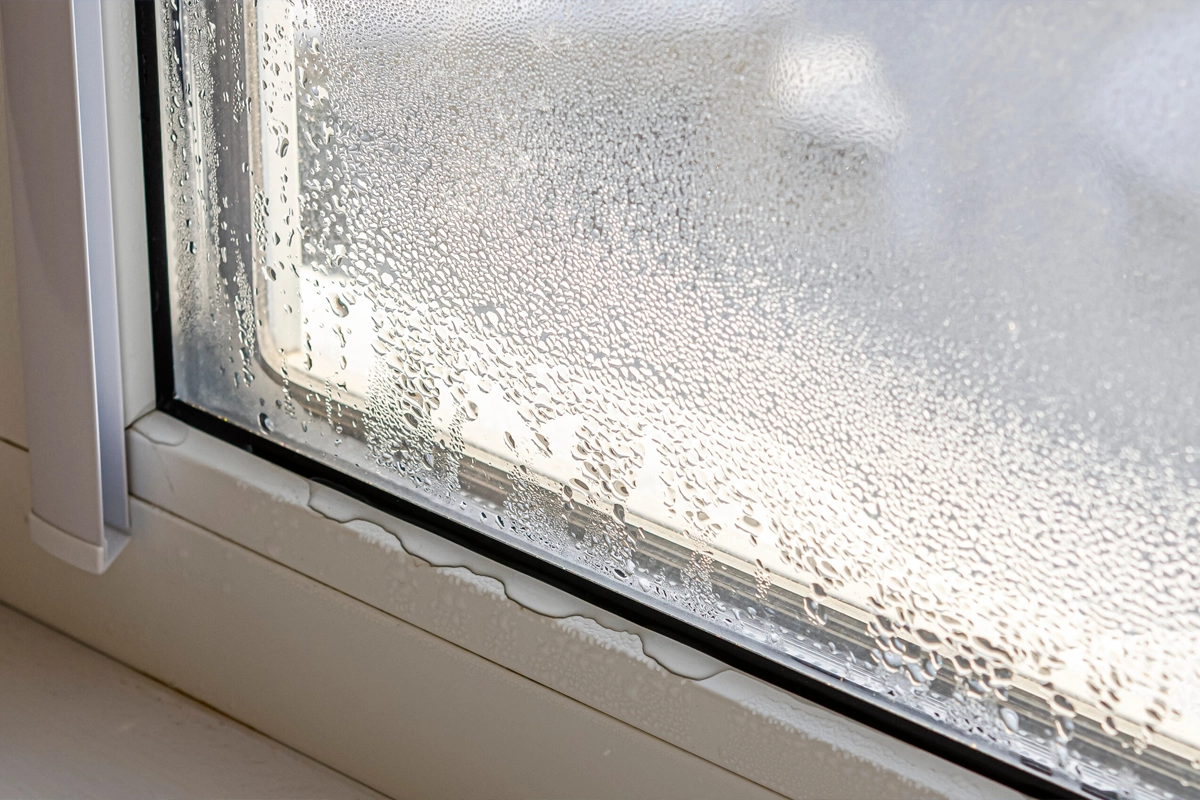
Condensation forms when moist air meets a surface whose temperature is below the air’s dew point.
ENERGY STAR explains that interior condensation can occur when the inside glass surface is cool enough relative to humid indoor air. Exterior condensation can also occur in warm weather when indoor cooling makes the exterior glass surface cooler than humid outdoor air.
That means visible water on an exposed surface is not automatically evidence of a leaking or defective impact window.
In Florida, humidity, air-conditioning settings, indoor moisture, shading, orientation, and glass performance can all affect when condensation appears.
How can I tell surface condensation from between-pane fogging?
Start with a simple observation.
Surface condensation
If the moisture is on a surface you can reach and wipe away, it is surface condensation.
It may appear:
- On the room-side glass
- On the exterior glass
- Near the lower edge of the lite
- Temporarily during particular weather or indoor-humidity conditions
Between-pane fogging
If the window uses an insulated glass unit and the haze, droplets, or film appear inside the sealed space between panes, you cannot wipe them from either exposed surface.
Department of Energy guidance describes insulated glazing as two or more panes separated and hermetically sealed around an insulating space. Moisture inside that sealed space can therefore point to an insulating-glass seal issue rather than ordinary room-side condensation.
The exact diagnosis and remedy still depend on the product.
Does fogging mean the impact rating is gone?
Do not make that conclusion from appearance alone.
Impact resistance and insulating-glass seal performance are different characteristics of a window system. A window can have an insulated glass unit as part of an impact-approved assembly, but a visible seal issue does not by itself tell you everything about the frame, laminate, anchors, impact status, or structural performance.
At the same time, do not ignore an obvious glazing problem. Identify the manufacturer and product series, document the condition, and follow the service path for the exact product.
If the glass is cracked or has suffered storm damage, use our guide on whether impact windows can break in a hurricane rather than treating it as a condensation question.
Could moisture be coming from the drainage system?
Possibly.
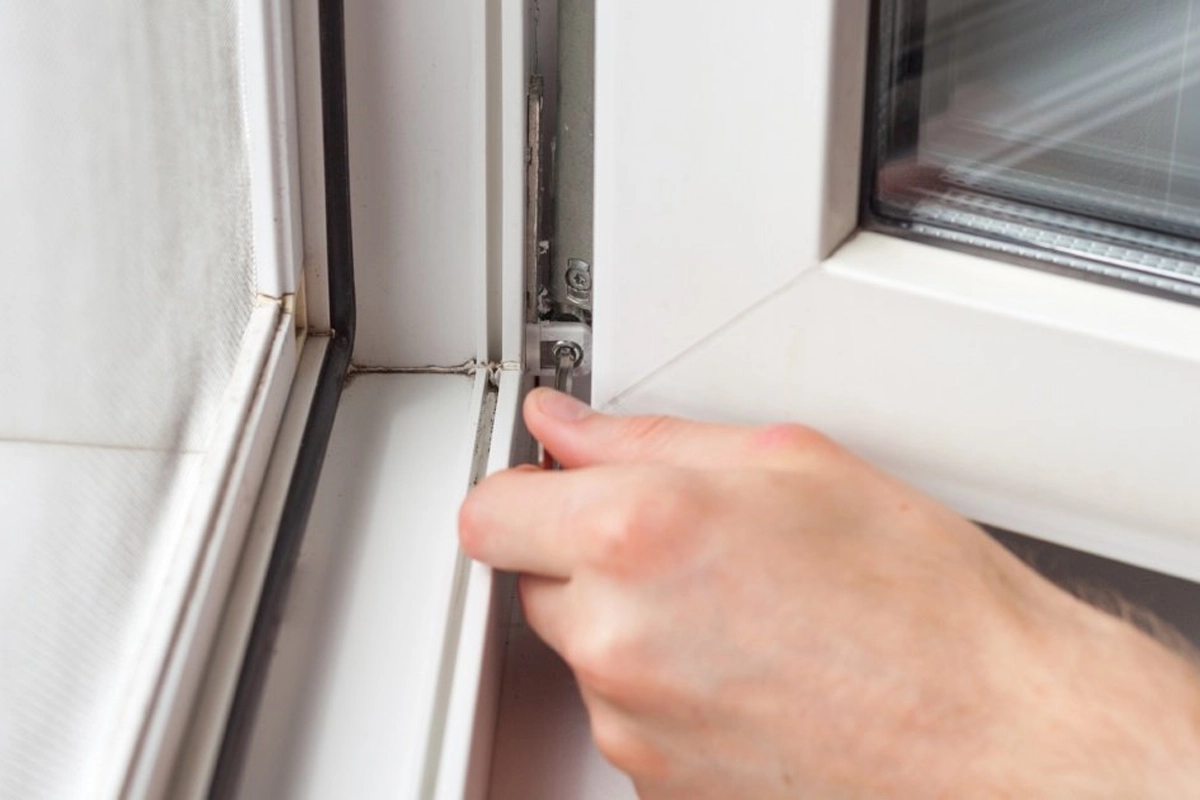
Many windows and doors are designed with drainage or weep paths that allow incidental water to exit the frame or sill. Those paths should not be confused with random holes that need to be filled with caulk.
Dirt, insects, paint, sealant, or debris can interfere with drainage on some systems. Manufacturer care instructions should be followed when cleaning tracks, sills, and weep areas.
Our impact-window maintenance guide covers tracks, weatherstripping, drainage, locks, coastal exposure, and other routine checks.
Do not drill new holes or modify the frame to “improve drainage” without product-specific guidance.
How is water intrusion different from condensation?
Water intrusion usually has clues that point to liquid water entering from the exterior or surrounding construction rather than moisture condensing from air.
Possible signs include:
- Water appearing during wind-driven rain
- Wet drywall or trim around the opening
- Staining below a sill
- Water at frame-to-wall joints
- Damaged or separated exterior sealant
- Repeated water accumulation that follows storms rather than humidity conditions
The source may be the window, installation, sealant, adjacent wall, roof, balcony, stucco, or another building-envelope condition. Water can travel before becoming visible indoors, so the first wet spot is not always the source.
Do not assume that replacing glass alone will solve a building-envelope leak.
Can energy-efficient windows still get condensation?
Yes.
ENERGY STAR states that qualified windows can be more resistant to condensation but can still experience it under certain conditions. The NFRC label can include a Condensation Resistance rating, which indicates how well a product resists interior surface moisture formation under rating conditions.
Energy performance also includes metrics such as U-factor and Solar Heat Gain Coefficient. Those characteristics are separate from impact resistance.
For Florida homeowners comparing replacement products, review the actual rated glass/frame configuration rather than assuming the word “impact” guarantees a specific condensation or energy outcome. See our impact-window energy-efficiency guide.
What should I do if I see fogging between the panes?
Document the condition before disturbing the window.
Useful steps include:
- Photograph the whole window and the fogging.
- Confirm that the moisture cannot be wiped from the interior or exterior surface.
- Locate product labels, etching, invoices, permits, or other identification.
- Identify the manufacturer and series.
- Check the current written warranty and service process.
- Contact the original dealer, manufacturer, or qualified service professional as appropriate.
Published manufacturer warranties can contain specific coverage for insulating-glass defects, laminated glass, stress cracks, parts, and labor. Do not assume one manufacturer’s terms apply to another.
Our impact-window warranty guide explains the difference between product and workmanship coverage.
When should a professional inspect the window?
Request service when you see persistent between-pane fogging, cracked glass, abnormal operation, frame movement, recurring water intrusion, damaged seals, or a condition you cannot confidently identify.
After a severe storm, an inspection may also be appropriate when the window has visible impact damage even if it still opens and closes.
If the issue could involve the surrounding wall or waterproofing, the evaluation may need to go beyond the window itself.
Frequently asked questions
Why are my impact windows wet on the outside in the morning?
Exterior condensation can occur when humid outdoor air contacts glass cooled by indoor air conditioning. If the moisture is on the reachable exterior surface and disappears as conditions change, it can be normal condensation rather than a leak.
Why is there moisture inside my impact window?
If “inside” means between panes of a sealed insulated glass unit, the condition can indicate a seal or insulating-glass issue. Identify the exact product and review the manufacturer’s service and warranty procedure.
Does condensation mean my impact windows were installed wrong?
Not necessarily. Surface condensation depends on temperature and humidity conditions. Installation can affect comfort and moisture performance, but visible condensation alone does not prove an installation defect.
Can I caulk the small holes in my window frame?
Do not caulk or block openings unless the manufacturer confirms they are not drainage paths. Weep systems are intentionally designed into many products.
Will Low-E glass stop all condensation?
No. Glass and frame performance can reduce condensation risk in some conditions, but indoor humidity, outdoor humidity, temperature, airflow, and climate still matter.
Is between-pane fogging covered by warranty?
It may be covered under some manufacturer warranties and product conditions, but terms vary. Check the exact current warranty, purchase/installation date, product series, and claim procedure.
Authoritative and manufacturer sources
- ENERGY STAR — Residential Windows, Doors & Skylights: Condensation
- ENERGY STAR — Window Performance Ratings
- U.S. Department of Energy — Window Types and Technologies
- PGT Windows & Doors — Technical Resources
- ES Windows — Frequently Asked Questions
Manufacturer sources are included for product-specific maintenance/service examples, not as universal instructions for every impact window.
The bottom line
“Foggy window” is a symptom, not a diagnosis.
Determine whether the moisture is on the surface, between panes, related to drainage, or entering around the opening. Then use the exact product information and building conditions to choose the correct response.
AA Glass & Windows can help evaluate existing openings and discuss replacement options when a window has persistent glass, frame, operation, or water-management problems. Request a free estimate to review your project.