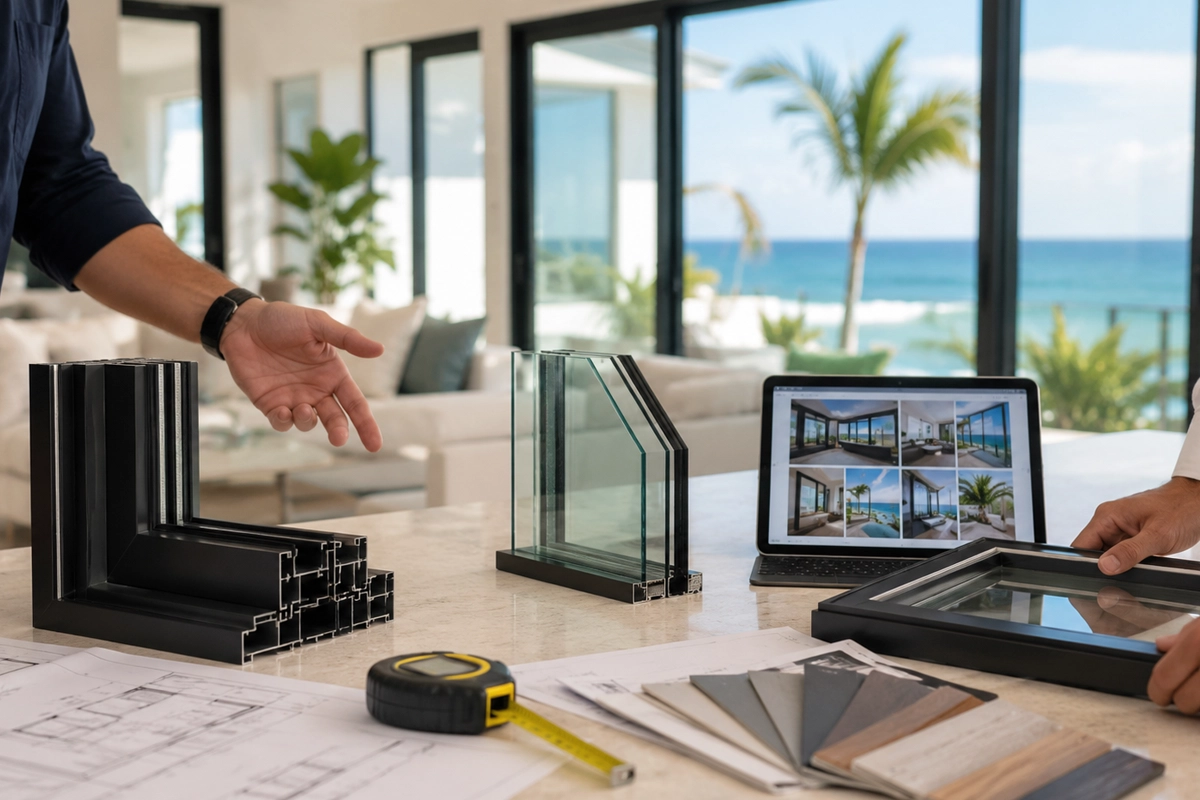
Florida homeowners researching impact windows often encounter the My Safe Florida Home Program (MSFH) because the state program can help eligible homeowners pay for hurricane-mitigation improvements recommended by a program inspection.
As of August 28, 2026, the official My Safe Florida Home support center says the program is accepting applications. Funding is not guaranteed, however. The program is subject to legislative appropriations and available funds, and the current 2026 Florida statute sets specific eligibility rules for inspections and grants.
Impact-rated windows can be an eligible improvement, but simply buying impact windows does not automatically create a grant. The project must follow the program process, the improvement must be recommended through the required inspection, and the homeowner must satisfy the current grant requirements.
Important: This article is general information, not legal, insurance, tax, or financial advice. My Safe Florida Home determines program eligibility, grant approval, funding availability, and reimbursement. Always verify your current portal status and program instructions before signing a project contract or beginning work.
Quick answer: can My Safe Florida Home help pay for impact windows?
Yes, impact-window improvements can be eligible for My Safe Florida Home grant funding when they are recommended by the program’s initial hurricane-mitigation inspection and the homeowner qualifies for a grant.
Under the current 2026 statute, eligible grant improvements can include opening protection for:
- Windows
- Exterior doors
- Garage doors
- Skylights
The program can also fund certain roof-mitigation improvements when recommended by the inspection.
The current grant structure provides:
- A matching grant with $2 in state funds for every $1 contributed by the homeowner, up to a maximum state contribution of $10,000.
- A low-income grant of up to $10,000 without a matching contribution requirement for qualifying low-income applicants.
The maximum state contribution is not a guaranteed payment. Approval, project cost, eligible work, final inspection results, documentation, appropriations, and available funds all matter.
Is My Safe Florida Home open in 2026?
Yes, according to the program’s official funding-status page reviewed on August 28, 2026.
The current My Safe Florida Home support center says homeowners can create an account in the Applicant Portal and complete the Prioritization Questionnaire to be assigned to an inspection or grant group. Applicants then follow the portal steps available for their group and case status.
Program availability can change because Florida law expressly states that My Safe Florida Home is subject to annual legislative appropriations and that accepted applications cannot exceed available funding.
That means homeowners should check the official program website and their applicant portal instead of relying on an old article, social post, contractor advertisement, or previous funding cycle.
A major 2026 point: inspection eligibility and grant eligibility are not the same
This distinction is easy to miss.
The current version of section 215.5586, Florida Statutes, has one set of requirements for receiving a hurricane-mitigation inspection and additional requirements for receiving grant funds.
A homeowner can therefore be eligible for an inspection without necessarily being eligible for a grant.
Current inspection eligibility
Under the 2026 statute, the home must generally be:
- A single-family dwelling on an individual parcel of land
- Either a detached residential property or an attached residential property not exceeding three stories
- Site-built
- Owner-occupied
- Homesteaded in Florida
The statute also allows an applicant who meets the inspection requirements to receive an inspection without being eligible for or applying for a grant.
Current grant eligibility adds more requirements
For a hurricane-mitigation grant, the current statute requires the applicant to satisfy the inspection requirements and also meet additional conditions, including:
- The home has an insured value of $700,000 or less.
- The home completed a My Safe Florida Home initial inspection within the 24 months immediately before the grant application.
- The home was built before January 1, 2008, as reflected on the county property appraiser’s website.
- The applicant agrees to make the home available for a final inspection after the mitigation project.
- The applicant agrees to provide the program information received from the insurer identifying discounts realized because of the funded improvements.
- The applicant is a low-income or moderate-income person under the income definitions referenced by the statute.
Because these requirements can change through legislation, homeowners should use the current statute and portal instructions rather than assuming eligibility from a previous program year.
What does low-income or moderate-income mean for the 2026 grant?
The current My Safe Florida Home grant statute points to the definitions in section 420.0004, Florida Statutes.
Under that statute:
- Low-income generally means household adjusted gross income does not exceed 80% of the applicable median income benchmark described by law.
- Moderate-income generally means household adjusted gross income is below 120% of the applicable median income benchmark described by law.
The statute compares state and local median-income measures and uses the greater applicable benchmark, so there is not one universal dollar figure that applies to every household in every Florida county.
Use the program’s current prioritization questionnaire and requested documentation to determine how your household is classified. Do not rely on a generic statewide income number from a third-party article.
Who gets reviewed first?
The current statute prioritizes applications in this order:
- Low-income applicants age 60 or older
- Other low-income applicants
- Moderate-income applicants age 60 or older
- Other moderate-income applicants
- Other eligible applicants for inspections
The important distinction is that the current grant-eligibility subsection specifically requires the grant applicant to be low-income or moderate-income, while the inspection provisions can extend beyond those income groups as funding and application timing allow.
How much can My Safe Florida Home contribute?
Matching grants
For applicants using the matching-grant structure, Florida law provides $2 in state grant funds for every $1 contributed by the homeowner, up to a maximum state contribution of $10,000 toward the actual cost of the eligible mitigation project.
For example, the program’s current support materials illustrate that an eligible $15,000 project can reach the maximum $10,000 state contribution, with the homeowner responsible for the remaining $5,000.
That is an illustration of the matching formula, not a promise that every $15,000 impact-window project will be approved or fully eligible.
Low-income grants
Low-income applicants who otherwise satisfy the program’s requirements can qualify for up to $10,000 without providing the normal matching amount.
The program’s current support materials also explain that low-income grants use a different disbursement process from matching grants.
Are impact windows automatically covered once I receive a grant?
No.
Grant funds are intended for improvements recommended by the initial My Safe Florida Home inspection that increase the home’s resistance to hurricane damage.
For windows, that means the inspection report matters. A homeowner should not assume that replacing any window, changing an aesthetic feature, or upgrading a product for reasons unrelated to the inspection will automatically qualify for grant reimbursement.
The current statute also says the Department of Financial Services may require improvements to all openings — including exterior doors, garage doors, windows, and skylights — as a condition of reimbursing an approved grant applicant.
Before ordering products, compare the contractor’s proposed scope with the exact improvements recommended in the My Safe Florida Home inspection report.
If you are still evaluating what impact windows involve outside the grant program, our Florida impact window installation guide explains product approvals, measurements, permitting, installation, inspections, and project closeout.
What types of opening protection can be eligible?
When recommended by the initial inspection, the statute identifies opening-protection improvements for:
- Exterior doors
- Garage doors
- Windows
- Skylights
The program is about hurricane mitigation, not about funding any product that happens to be sold as a home improvement.
For impact windows and doors, homeowners should still verify the exact product, approval documentation, design conditions, and installation requirements for the property. Our guide on how to tell if windows are impact resistant explains why labels, product approvals, permits, and exact model information matter.
The My Safe Florida Home process for an impact-window project
The safest way to plan the project is to follow the program sequence instead of treating the grant as a discount applied at checkout.
Step 1: check current program status
Go to the official My Safe Florida Home website and confirm that applications are currently being accepted for your stage of the program.
Availability can change with funding and applicant volume.
Step 2: create your applicant-portal account
The official program directs applicants to create an account and complete the Prioritization Questionnaire. That information helps place the homeowner into the appropriate inspection or grant group.
Step 3: apply for the initial hurricane-mitigation inspection
The initial inspection identifies the home’s existing mitigation features and recommended improvements.
The inspection is not just a formality. It determines which improvements can become part of a grant-funded mitigation project.
Step 4: review the inspection report before requesting quotes
Read the exact recommendations and understand which openings or other mitigation items the report identifies.
Then request contractor proposals that correspond to those recommendations.
For homeowners comparing companies, our impact-window contractor selection guide covers proposal scope, licensing, product documentation, warranties, and questions to ask before signing.
Step 5: apply for the grant if you meet the current requirements
The grant application requires documentation showing that the applicant meets the program criteria.
The current statute also requires the application to identify the intended contractor by name and state license number, and the program must verify the license number.
Step 6: do not start construction before official grant approval
This is one of the most important program rules.
The current official My Safe Florida Home FAQ says not to begin mitigation construction before receiving the official grant approval notice. Starting work before approval can disqualify the project from reimbursement.
Do not treat a submitted application, completed inspection, contractor estimate, or portal questionnaire as permission to begin work.
Step 7: use an appropriately licensed Florida contractor and obtain required permits
Florida law requires mitigation work funded through the program to use required local permits and inspections and to be performed by properly licensed contractors.
The current My Safe Florida Home FAQ says the homeowner may select a licensed Florida contractor and that the program no longer maintains a list of authorized contractors.
The homeowner remains responsible for choosing and managing the contractor.
Step 8: complete only approved, recommended mitigation work
Keep the scope aligned with the initial inspection, grant approval, permits, product documentation, and any program instructions.
If the project changes, verify the effect on grant eligibility before assuming a change order will be reimbursed.
Step 9: request the final My Safe Florida Home inspection
The final inspection is essential because current law requires the funded improvements to be identified by the final hurricane-mitigation inspection before grant funds are paid.
Step 10: submit the required draw or reimbursement documentation
Follow the instructions in the applicant portal for the grant type you received.
The documentation requirements differ between matching and low-income grants, so use the current portal checklist for your case rather than copying another homeowner’s paperwork.
How long do approved homeowners have to complete the project in 2026?
The current 2026 statute says an applicant who receives a grant must finalize construction and request a final inspection within 18 months after grant application approval.
This is an important current-law detail because older My Safe Florida Home materials and older online guides may refer to different completion periods.
For a 2026 project, use the deadline shown in your current approval documents and portal, and verify any discrepancy directly with My Safe Florida Home before relying on older guidance.
Can I choose my own impact-window contractor?
Yes, within the program rules.
The current official FAQ says homeowners may choose a licensed Florida contractor to perform eligible upgrades. The program no longer maintains an authorized-contractor list and does not select the contractor for the homeowner.
The contractor’s license still has to be appropriate for the work, and the current statute requires the intended contractor’s name and state license number in the grant application.
Before committing to a contractor, confirm:
- The license is active and appropriate for the scope
- The proposed windows or doors match the inspection recommendation
- The exact product series and approval documentation are identified
- Permitting is included and responsibilities are clear
- The proposal separates included and excluded finish work
- The contractor understands that work cannot begin before the program authorizes it
- Payment and reimbursement expectations are understood before construction begins
Does the grant mean the impact windows are free?
Not necessarily.
A matching grant requires the homeowner’s contribution, and even the maximum state contribution may be less than the total cost of a large window-and-door project.
Low-income grants can work differently, but they are still subject to eligibility, approved work, actual project cost, program rules, documentation, appropriations, and the maximum grant allowance.
For broader budgeting, read our guide to impact window cost factors in Florida. It explains why opening size, window style, glass configuration, access, installation conditions, finish work, and other factors can affect a proposal.
Is My Safe Florida Home the same as Florida’s home-hardening sales tax refund?
No. They are separate state programs with separate eligibility and application processes.
My Safe Florida Home is administered through the Florida Department of Financial Services and centers on hurricane-mitigation inspections and grants.
Florida’s home-hardening sales tax refund is administered through the Florida Department of Revenue and applies under separate tax-law requirements.
The My Safe Florida Home support center states that an eligible homeowner can potentially benefit from both programs without a conflict, but each program must be satisfied independently.
See our Florida home-hardening sales tax refund guide for the separate refund rules and documentation.
Does a My Safe Florida Home grant guarantee an insurance discount?
No.
The initial inspection is intended in part to identify mitigation features and potential insurance-premium discounts, and the grant statute requires homeowners to provide information about discounts realized after funded improvements.
But the actual insurance result depends on the insurer, policy, rating plan, complete mitigation configuration, inspection documentation, and other underwriting factors.
Do not build a project budget around a guaranteed insurance-savings percentage unless your licensed insurance professional or carrier has confirmed the property-specific result.
What documents should I keep for an impact-window grant project?
Maintain a complete project file from the first inspection through the final draw request.
Useful records include:
- My Safe Florida Home application and case information
- Prioritization-group documentation
- Initial inspection report
- Grant approval notice
- Contractor proposal and signed agreement
- Contractor license information
- Exact window and door manufacturer / series information
- Florida Product Approval or Miami-Dade NOA documentation when applicable
- Permits and inspection records
- Invoices and payment records required for the applicable grant type
- Change orders
- Final My Safe Florida Home inspection report
- Draw or reimbursement submission records
- Insurance correspondence regarding mitigation discounts
These records can also be useful for future warranty, permit, insurance, resale, and product-verification questions.
Frequently asked questions
Is My Safe Florida Home accepting applications right now?
As of August 28, 2026, the official program support center says My Safe Florida Home is accepting applications. Because funding and application stages can change, verify the current status on the official program website before beginning the process.
Can every Florida homeowner receive a $10,000 grant?
No. The current statute has specific property, inspection, income, timing, and documentation requirements, and funding is subject to legislative appropriations and availability. The $10,000 figure is a maximum state contribution for eligible grants, not an automatic award.
Can a homeowner above the moderate-income threshold still get a free inspection?
The current statute separates inspection eligibility from grant eligibility and includes other eligible inspection applicants after the priority income groups. The grant subsection, however, currently requires the applicant to be low-income or moderate-income.
Does the house have to be old enough to qualify for a grant?
Yes. Under the current 2026 grant statute, the home must have been built before January 1, 2008, as reflected on the county property appraiser’s website.
Does the $700,000 limit refer to market value?
The current grant statute uses insured value, not a generic real-estate market-price figure. The program’s support materials currently request insurance documentation showing the applicable dwelling coverage value. Follow the portal’s current documentation instructions for your application.
Can I install only a few impact windows with the grant?
Do not assume a partial-opening project will qualify. The improvement must be recommended by the initial inspection, and the statute allows the Department of Financial Services to require improvements to all openings as a condition of reimbursement.
Can I sign a contract before grant approval?
The official FAQ specifically warns not to begin mitigation construction before official grant approval. Because contracting, deposits, ordering, and authorization details can affect a case, follow the current portal and approval instructions before committing funds or authorizing work.
Are impact doors and garage doors eligible too?
They can be. The current statute identifies exterior doors, garage doors, windows, and skylights as eligible opening-protection categories when recommended by the initial inspection.
How long do I have after approval?
The current 2026 statute says grant recipients must finalize construction and request the final inspection within 18 months after grant application approval.
Can My Safe Florida Home choose my contractor for me?
No. The current program FAQ says homeowners choose their own appropriately licensed Florida contractor. My Safe Florida Home does not maintain an authorized-contractor list or take responsibility for contractor selection.
Official sources
Because this program changes through legislation and annual funding, verify current requirements against primary sources before acting:
- Florida Statutes, Section 215.5586 — My Safe Florida Home Program
- Florida Statutes, Section 420.0004 — Low- and Moderate-Income Definitions
- My Safe Florida Home — Official Program Website
- My Safe Florida Home Support Center — Is Funding Currently Available?
- My Safe Florida Home — Grant Application Eligibility
- My Safe Florida Home — Frequently Asked Questions
- Florida Department of Financial Services — 2026 Property Insurance Changes
The bottom line
My Safe Florida Home can make an impact-window project more affordable for an eligible Florida homeowner, but the grant should be treated as a regulated mitigation program — not as a coupon for any replacement-window purchase.
The safest sequence is to check current funding, complete the program’s required inspection process, confirm grant eligibility, match the contractor scope to the inspection recommendations, wait for official approval before beginning construction, use a properly licensed contractor with required permits, and complete the final inspection and documentation on time.
AA Glass & Windows can help you review impact-window and impact-door options, product documentation, and the project scope for your Florida property. My Safe Florida Home makes the eligibility and funding decisions. Request a free estimate to discuss the openings you want to protect and the products that may fit your project.