September is one of the most important months on the calendar for Florida hurricane preparedness. The Atlantic hurricane season officially runs from June 1 through November 30, but tropical cyclone activity is not distributed evenly across those six months.
The National Hurricane Center’s climatology places the peak of Atlantic hurricane season on September 10, with most activity occurring from mid-August through mid-October. That does not mean a hurricane will strike Florida on or near September 10. It means the Atlantic basin has historically produced its highest concentration of tropical cyclone activity around that part of the season.
For Florida homeowners, the practical lesson is simple: September is not the time to assume the risk is fading. It is the time to confirm that your storm plan, evacuation information, windows, doors, shutters, supplies, documents, and communication plan are ready before a specific storm creates a deadline.
This guide explains what “peak hurricane season” actually means, how NOAA’s updated August 6, 2026 seasonal outlook should be interpreted, and what homeowners can realistically do about windows and doors during the busiest part of the season.
Quick answer: when is peak hurricane season in Florida?
For the Atlantic basin, which includes the Atlantic Ocean, Caribbean Sea, and Gulf, the official hurricane season is June 1 to November 30.
According to the National Hurricane Center’s tropical cyclone climatology:
- The climatological peak is September 10.
- Most Atlantic tropical cyclone activity occurs between mid-August and mid-October.
- Storms can still form before or after that peak window.
- The official season does not end until November 30.
Florida can be affected at any point in the season. A climatological peak describes the basin-wide historical pattern; it is not a prediction that a particular city, county, or coastline will be hit on a particular date.
If you are looking for a broader seasonal checklist, our Florida hurricane-season home preparation guide covers emergency supplies, outdoor areas, documents, evacuation planning, windows, doors, and permanent storm protection.
Why September is historically so active
Atlantic hurricane activity tends to increase as several seasonal ingredients become more favorable at the same time.
By late summer and early fall, large areas of the tropical Atlantic and surrounding waters are warm enough to support tropical cyclone development. Atmospheric patterns also tend to become more favorable than they are earlier in the season, and disturbances moving across the tropical Atlantic have had more time and space to organize.
That combination is why the hurricane-season activity curve rises sharply in August, reaches its climatological high point around September 10, and remains elevated into October.
The National Hurricane Center’s climatology is the best reference for the timing itself. It uses historical Atlantic activity to show the average number of named storms and hurricanes occurring on each calendar day.
What NOAA’s August 2026 outlook says
NOAA issued its updated 2026 Atlantic Hurricane Season Outlook on August 6, 2026.
The update says a below-normal Atlantic season is the most likely outcome, with:
- 75% chance of a below-normal season
- 20% chance of a near-normal season
- 5% chance of an above-normal season
NOAA’s updated 70%-probability ranges are:
- 7-13 named storms for the full season, including the two already recorded when the outlook was issued
- 2-6 hurricanes
- 0-2 major hurricanes
NOAA also says most of the predicted activity is likely during August, September, and October, the peak months of the season.
Those numbers are useful for understanding the expected activity of the Atlantic basin as a whole. They are not a Florida landfall forecast.
NOAA explicitly states that its seasonal outlook does not predict how many storms will strike a particular location. Landfall risk depends on shorter-term weather patterns that become predictable only much closer to an individual storm.
A below-normal forecast does not mean Florida can relax
This distinction matters. A season can finish below normal overall and still produce a damaging storm for one community.
NOAA’s own preparedness guidance emphasizes that hurricane-related disasters can happen even during seasons with low overall activity and that residents should prepare regardless of the seasonal outlook.
For a homeowner, the question should not be, “Is the season expected to be busy?” The better questions are:
- Is my household prepared if one storm threatens my area?
- Do I know my evacuation zone?
- Do I know how my windows and doors are protected?
- Are my shutters, panels, or permanent impact systems ready to use?
- Do I have the documents and supplies I would need if power or access is disrupted?
September is National Preparedness Month
September is also recognized through the federal Ready campaign as National Preparedness Month.
That timing is useful for Florida households because it overlaps the climatological peak of Atlantic hurricane season. Preparedness Month is not a forecast and does not imply that a storm is imminent. It is a reminder to use a relatively calm day to handle tasks that are harder to manage once watches or warnings are issued.
A good September preparedness review should include both life-safety planning and property planning.
Life-safety planning includes evacuation routes, family communication, medications, pets, backup power, emergency supplies, and official alerts. Property planning includes understanding how the roof, garage door, windows, exterior doors, sliding glass doors, and other openings are protected.
Know your evacuation zone before you focus on the windows
Windows and doors are important, but they do not replace evacuation planning.
Florida’s Division of Emergency Management maintains the Know Your Zone, Know Your Home resource so residents can identify evacuation zones and better understand whether their property may be vulnerable to storm surge, flooding, high winds, or other hazards.
If local officials issue an evacuation order for your area, follow that order. Impact windows, shutters, roof upgrades, or other mitigation improvements do not make it appropriate to ignore evacuation instructions.
Before a storm is near Florida, confirm:
- Your evacuation zone, if your county uses one
- Your planned destination if you need to leave
- How you will transport children, older relatives, pets, and essential medical equipment
- Which local emergency-management alerts you receive
- Where you will obtain official National Hurricane Center updates
What should homeowners check on windows and doors in September?
The peak-season review should focus first on what is already installed and what is ready to deploy.
1. Make sure every opening closes and locks properly
Test windows, exterior doors, French doors, sliding glass doors, and garage doors before bad weather is in the forecast.
Look for:
- Locks that do not engage
- Windows that will not close fully
- Loose or damaged frames
- Door hardware that is difficult to operate
- Sliding doors that bind or jump the track
- Cracked glass
- Corrosion or deterioration around hardware
- Missing shutter fasteners or panel hardware
A problem discovered on a normal September morning gives you more options than the same problem discovered after a hurricane watch is issued.
2. Identify the exact protection method for each glazed opening
Do not assume a window is impact resistant because it is thick, tinted, laminated-looking, or installed in a newer frame.
If you are uncertain about an existing window, use product labels, permit records, Florida Product Approval information, Miami-Dade NOA documentation when applicable, and professional verification. Our guide on how to tell if windows are impact resistant explains the evidence homeowners can use.
3. Confirm shutters or panels are accessible
If your home relies on removable panels or deployable shutters, make sure the system is complete before a storm approaches.
Confirm that:
- Panels are labeled for the correct openings
- Fasteners and tracks are present
- Hardware is not badly corroded or damaged
- You know where installation tools are stored
- The people expected to deploy the protection can actually do so
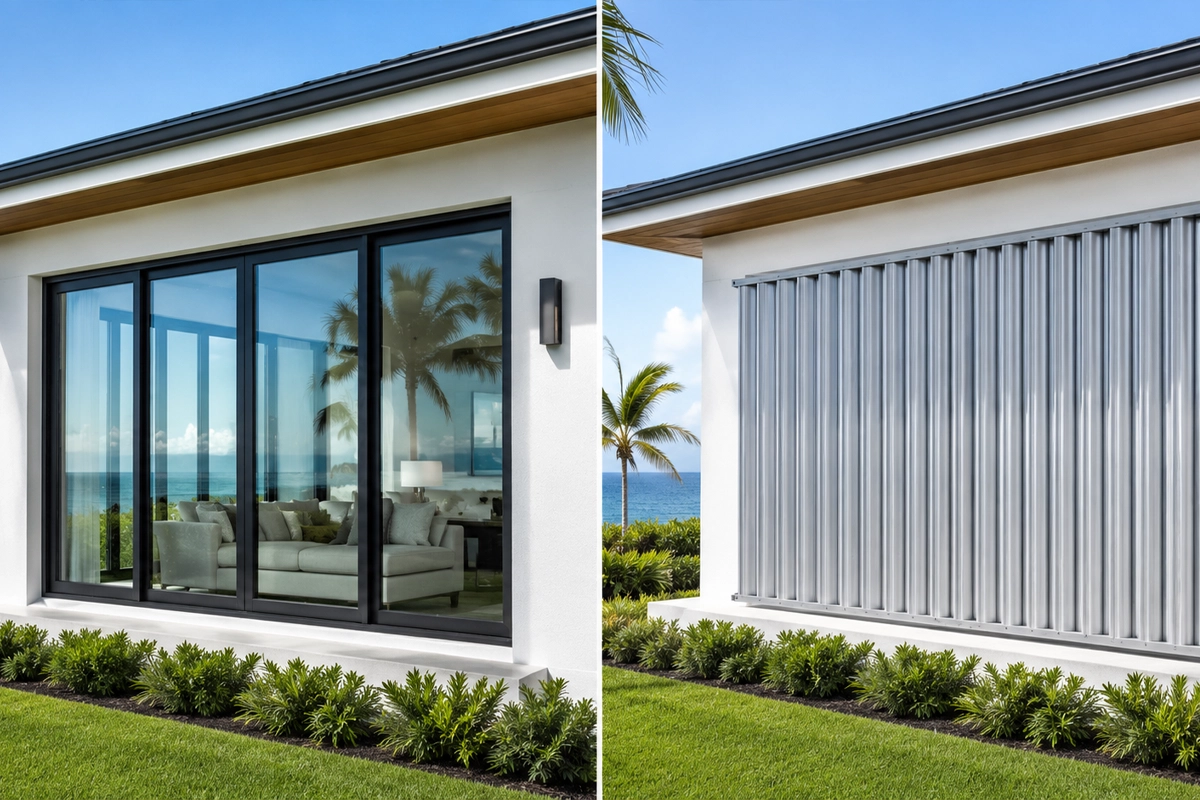
If you are comparing permanent protection with deployable systems for the future, see impact windows vs. hurricane shutters in Florida.
4. Keep product and permit records together
Store digital or printed copies of relevant records such as:
- Window and door manufacturer information
- Product series or model
- Florida Product Approval or Miami-Dade NOA information when applicable
- Permit number
- Final inspection or closeout documentation
- Installation and manufacturer warranties
- Photos of labels or permanent markings
These records can be useful after a storm, during future repairs, for insurance questions, or when you need to identify exactly what is installed.
Is September too late to start an impact-window project?
Not necessarily, but it is too late to treat a full replacement project as an instant response to an approaching storm.
A permitted impact-window or impact-door replacement project can involve:
- Site evaluation
- Final measurements
- Product and configuration selection
- Product-approval and design-pressure review
- HOA or condo approval when applicable
- Permit preparation and review
- Product ordering or manufacturing
- Installation scheduling
- Installation and finishing
- Required inspections and permit closeout
The exact sequence and timing vary by project, product, jurisdiction, and current availability.
Our impact-window installation process guide explains these stages in detail.
Do not rely on a replacement project for a storm that is already close
If a tropical system is already threatening your area, focus on the protection and emergency plan you can safely execute now. Follow official weather information and local emergency-management instructions.
Do not rush into unverified window modifications, improvised fastening, or an unpermitted replacement simply because a storm is in the forecast.
A permanent impact project should be planned around the correct product, approved installation method, permitting requirements, and realistic schedule. That is better than making a hurried decision under storm pressure.
What can you do now if permanent impact protection is a future goal?
Peak season can still be a useful time to begin the planning process for long-term protection.
You can:
- Request an estimate
- Identify which openings you want to replace
- Photograph existing windows and doors
- Gather old permit or product records
- Compare window and door operating styles
- Ask which exact product approvals apply
- Review HOA or condo requirements
- Understand the permit process in your jurisdiction
- Compare impact windows with shutters
- Review financing options only after the project scope is clear
The goal is not to promise that a September estimate will produce installation before the next storm. The goal is to move from uncertainty to a documented project plan.
For product options, visit our impact windows service page and impact doors service page.
A peak-season checklist for Florida homeowners
Use this checklist during September whether or not a storm is currently near Florida.
Home and openings
- Test window locks and operation
- Test exterior and sliding-door locks
- Check visible frames and seals for damage
- Identify which openings are impact-rated
- Locate shutters, panels, fasteners, and tools
- Check garage-door operation and visible condition
- Store product and permit records where you can access them
Emergency plan
- Confirm your evacuation zone
- Review your family communication plan
- Confirm where you would evacuate if ordered
- Plan for pets, medications, and medical equipment
- Verify emergency contacts
- Sign up for local emergency alerts
Supplies and documents
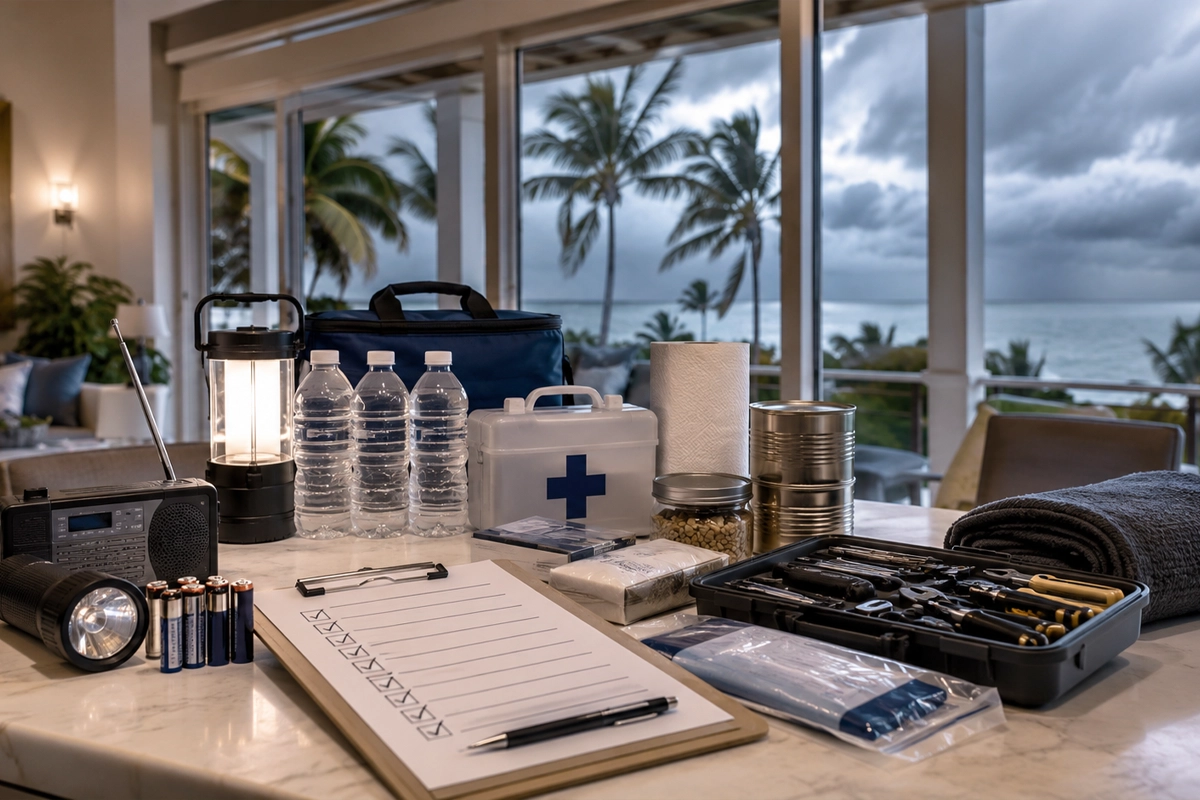
- Review food and water supplies
- Charge power banks and backup batteries
- Check flashlights and radios
- Refill necessary prescriptions
- Store insurance and identity documents securely
- Photograph the home’s current condition
Information
- Bookmark the National Hurricane Center
- Follow your county emergency-management office
- Check evacuation information before a storm forms
- Use official watches and warnings rather than social-media rumors
Questions to ask an impact-window contractor during peak season
If you are requesting estimates in September, ask questions that separate a realistic project plan from a rushed promise:
- What exact manufacturer and product series are proposed?
- What Florida Product Approval or Miami-Dade NOA applies where relevant?
- Are final field measurements included before ordering?
- Who prepares and submits the permit?
- Does my HOA or condo need to approve the project first?
- Is the quoted product in stock, in distribution, or made to order?
- What milestone starts the quoted timeline?
- What happens if a named storm affects scheduling?
- What temporary protection should remain available until the project is fully installed and closed out?
- What inspections are required?
- What warranties and closeout documents will I receive?
- Is any promised installation date written into the contract, and what conditions can change it?
These questions are more useful than asking only, “Can you install before the next hurricane?”
Peak season is a timing fact, not a reason for panic
The most useful way to think about September is as a planning deadline, not a fear message.
The Atlantic’s historical activity curve is at or near its highest point, and NOAA expects most of the remaining 2026 activity during August through October. That makes preparedness especially relevant now.
But the correct response is not panic buying or rushed construction. It is to verify what protection already exists, fix obvious maintenance problems, know your evacuation plan, keep supplies and documents ready, monitor official forecasts, and plan long-term upgrades carefully.
Frequently asked questions
What date is the peak of Atlantic hurricane season?
The National Hurricane Center’s climatology identifies September 10 as the peak date for Atlantic tropical cyclone activity. Most activity occurs from mid-August through mid-October.
Is September the most dangerous month for hurricanes in Florida?
September is within the Atlantic basin’s climatological peak period, but the risk to a specific Florida community depends on whether individual storms form and where they track. The September 10 peak is a historical basin-wide average, not a Florida landfall prediction.
Does NOAA expect 2026 to be an active hurricane season?
NOAA’s August 6, 2026 update says a below-normal season is the most likely outcome, with a 75% probability of below-normal activity. NOAA still expects most seasonal activity during August, September, and October and emphasizes that its seasonal outlook is not a landfall forecast.
If the season is forecast below normal, do I still need to prepare?
Yes. NOAA notes that damaging hurricanes or tropical storms can occur even during a season with low overall activity. A seasonal activity forecast does not determine whether one storm may affect your area.
Should I wait for a hurricane warning before ordering impact windows?
No. A complete impact-window replacement can involve measurements, approvals, permits, product lead time, installation, inspections, and closeout. It should be planned before an imminent storm rather than treated as a last-minute emergency measure.
Do impact windows mean I never have to evacuate?
No. Permanent opening protection does not override an evacuation order. Follow instructions from local emergency-management officials and know your evacuation zone.
Are shutters still a valid hurricane-protection option?
Approved and properly installed shutter or panel systems can protect openings when they are maintained and deployed correctly. The best choice depends on the property, budget, physical ability to deploy protection, and applicable product and code requirements.
When does hurricane season end in Florida?
The official Atlantic hurricane season ends November 30. Storms can still occur after the climatological September peak, including during October and November.
Official sources
Hurricane forecasts and preparedness guidance can change. Use primary sources for current information:
- National Hurricane Center — Tropical Cyclone Climatology
- NOAA Climate Prediction Center — 2026 Atlantic Hurricane Season Outlook, issued August 6, 2026
- Ready.gov — National Preparedness Month and hurricane preparedness
- Florida Division of Emergency Management — Know Your Zone, Know Your Home
The bottom line
Peak hurricane season in Florida aligns with the Atlantic basin’s busiest historical period: mid-August through mid-October, with a climatological peak on September 10.
NOAA’s current 2026 outlook favors a below-normal season, but that does not predict Florida landfalls and does not reduce the value of household preparedness. September is a good time to confirm evacuation information, inspect windows and doors, check shutters or panels, organize documents, review emergency supplies, and start long-term impact-window or impact-door planning without assuming a rushed installation can protect against an approaching storm.
If you want to understand the condition of your current openings or start planning permanent impact protection, AA Glass & Windows can help you review the project scope and next steps. Request a free estimate to begin with a documented plan rather than a last-minute decision.