Impact windows are popular in Florida for good reasons: they provide permanent opening protection when the exact system is properly selected and installed, they eliminate the need to deploy shutters over those protected openings before every storm, and they can offer useful everyday features such as laminated glass, updated frames, and modern glazing options.
But they also have tradeoffs.
A homeowner making a major replacement decision deserves more than a list of benefits. The most useful question is: what are the negatives of impact windows, and which of those negatives actually matter for my property?
1. The project can be a major upfront investment
Impact-window projects involve more than the glass itself.
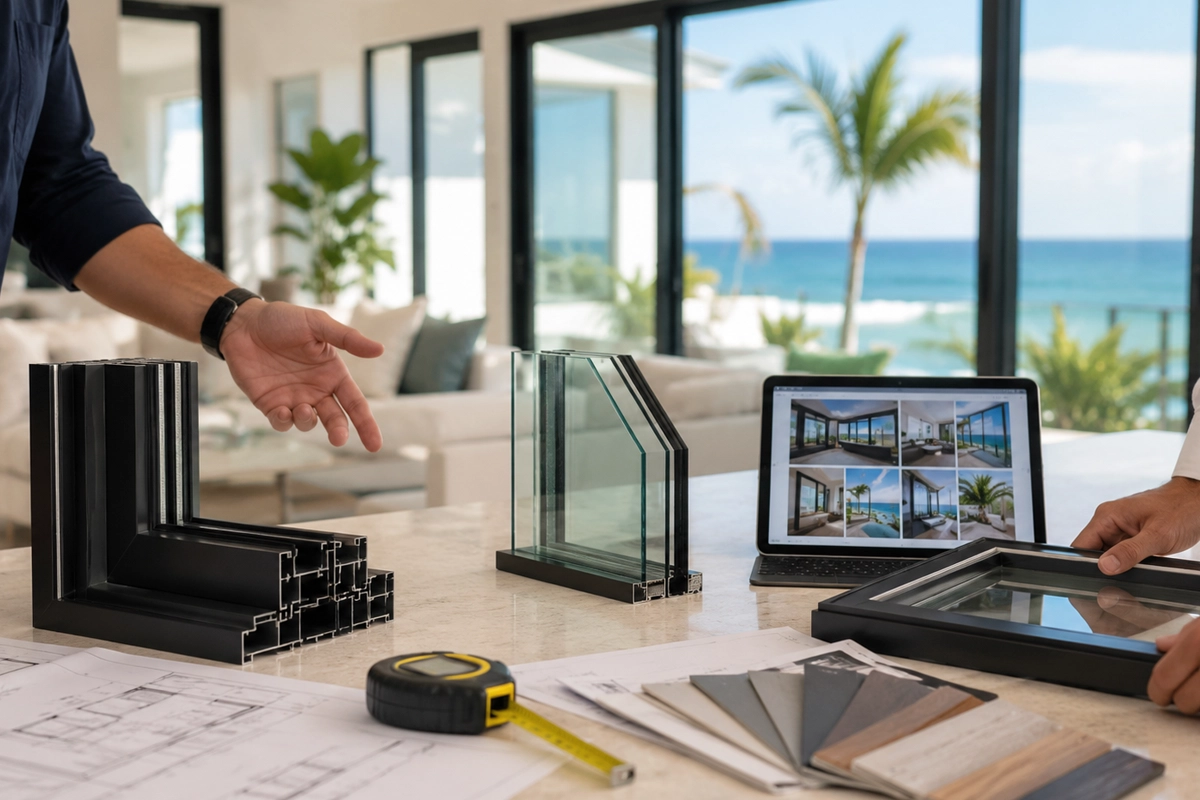
The total scope can include:
- Window or door systems
- Size and configuration
- Glass package and tint
- Removal of existing units
- Installation labor
- Anchors and substrate conditions
- Mullions or structural conditions
- Permits and inspections
- Interior/exterior finish work
- Association requirements
- Access or staging for upper floors
That is why one generic “price per window” is rarely a reliable planning tool.
Our Florida impact-window cost guide explains the factors to compare without inventing a universal installed price.
Financing can spread payments for eligible customers, but financing is not free money and approval is never guaranteed. Read the actual loan or financing terms before choosing a project based on a monthly payment. See our impact-window financing guide.
2. Impact windows can be heavier than the windows they replace
Laminated glass, insulated glass options, stronger frames, and larger moving panels can increase system weight.
That does not mean a properly installed impact window should be difficult to use. It does mean the quality of rollers, balances, operators, locks, adjustment, and ongoing maintenance matters.
For large patio openings, panel weight is especially relevant. Our guide to impact sliding glass doors explains the track, roller, threshold, and panel questions worth asking.
3. Repair can be more product-specific
A broken pane in an ordinary non-impact window may look like a simple glass replacement. An impact system requires more care because the glazing, frame, sash, hardware, anchors, size, and approved configuration work together.
Some manufacturers support replacement glass units or parts for particular products. Other damage can require a larger repair or full-unit replacement.
Do not assume that any laminated glass, any lock, or any aftermarket film can be substituted while preserving the original tested configuration.
See our guide on repairing impact windows for a product-specific approach.
4. Permits and approvals add real project steps
Florida’s product-approval framework is a consumer-protection benefit, but it also means a legitimate project involves documentation.
Florida Statute §553.842 covers windows, exterior doors, shutters, and impact-protective systems and restricts hurricane/impact marketing to products with the required approval.
Depending on the jurisdiction and project, the contractor may need product approvals, opening sizes, glass details, design pressures, and other permit information.
This is not a reason to skip the upgrade. It is a reason to be skeptical of contractors who promise to bypass permits or cannot identify the exact approval for the product they are selling.
5. HOA and condo requirements can affect style and timing
A property association can add an approval process before installation.
Florida law provides significant hurricane-protection rights, but homeowners may still need to follow valid architectural specifications governing color, style, exterior appearance, and project procedure.
Condominium responsibility can be even more complex because the declaration may determine whether exterior windows are maintained or replaced by the association or unit owner.
If this applies to your property, review our HOA impact-window guide and Florida condo responsibility guide.
6. “Impact” does not guarantee the best energy performance
Impact resistance and energy efficiency are different characteristics.
A window can be impact rated while being offered with multiple glass packages. ENERGY STAR and NFRC ratings such as U-factor and Solar Heat Gain Coefficient help evaluate thermal performance.
If a salesperson says impact windows will automatically cut your electric bill by a specific percentage, ask for the product-specific rating and evidence behind the claim.
Our energy-efficiency guide explains how to compare glass and frame options.
7. Insurance savings are not automatic
Impact protection can be relevant to wind-mitigation and underwriting, but no contractor can guarantee the insurance premium outcome for every home.
Carrier rules, inspection results, the condition of other openings, roof characteristics, policy details, and other factors can influence the result.
Do not sign a project solely because someone promises a particular insurance discount without insurer-specific evidence. Read our guide to impact windows and Florida insurance for a more careful explanation.
8. They still require maintenance
Impact-resistant does not mean maintenance-free.
Tracks, rollers, locks, operators, weatherstripping, finishes, sealant interfaces, and drainage paths still need attention. Coastal salt exposure can increase maintenance demands for some components.
Follow the exact manufacturer’s care instructions. Do not block weep paths, use unapproved lubricants, or modify the frame based on generic internet advice.
See our impact-window maintenance checklist.
9. Impact windows can still be damaged
Impact glass is not indestructible.
Laminated impact glazing can crack under severe impact. The purpose of an approved impact system is not to promise that the glass will never break; it is to meet specified impact and pressure-testing requirements as a complete assembly.
After significant damage, have the exact product evaluated before relying on it for another storm. See can impact windows break in a hurricane?.
10. Windows are only one part of hurricane risk
Even a home with impact windows still has a roof, garage door, exterior doors, walls, drainage, flood or storm-surge exposure, utilities, and evacuation considerations.
Impact windows are not a reason to ignore official emergency instructions. If authorities order an evacuation, follow the order.
The National Hurricane Center and local emergency-management agencies remain the appropriate sources for storm preparedness and evacuation information.
So what are the main benefits?
A balanced comparison should include what homeowners receive in exchange for the tradeoffs.
Potential advantages of a properly approved and installed system include:
- Permanent protection at the covered opening
- No shutter deployment at those openings before each storm
- Laminated glazing behavior designed for impact applications
- Updated frames, locks, and operation
- Available energy-performance options
- Available tint, privacy, and architectural options
- Potential relevance to wind-mitigation documentation
- A documented disaster-mitigation feature for the property
The exact benefits still depend on the product and project.
Who is a good candidate for impact windows?
Impact windows can make sense when a homeowner values permanent opening protection, expects to remain in the home, wants to replace aging windows anyway, prefers not to deploy shutters, or wants a coordinated upgrade of glass, frames, operation, and storm protection.
A phased approach may make more sense when budget or project logistics do not support whole-home replacement at once. See our guide to replacing windows all at once or in stages.
Frequently asked questions
What is the biggest disadvantage of impact windows?
For many homeowners, the initial project cost and scope are the biggest barriers. The exact impact depends on opening count, sizes, products, installation conditions, permits, and finish work.
Are impact windows hard to open?
They can be heavier than older windows, but a correctly selected, installed, adjusted, and maintained unit should operate according to its design. Hardware quality and maintenance matter.
Can impact windows break?
Yes. Impact glazing can crack or suffer damage. It should not be marketed as unbreakable or hurricane proof.
Do impact windows always lower insurance?
No. They can be relevant to wind mitigation, but actual insurance eligibility and premium effects depend on the carrier, policy, inspection, and full property characteristics.
Do impact windows always save energy?
No fixed savings should be promised from impact status alone. Compare the actual NFRC-rated glass and frame configuration.
Are impact windows worth it in Florida?
They can be a strong fit for homeowners who value permanent opening protection and the broader window/door upgrade, but the right answer depends on the property, budget, existing protection, ownership horizon, association rules, and product choices.
Authoritative sources
- Florida Statutes §553.842 — Product evaluation and approval
- Florida Building Commission — Product Approval Search
- Miami-Dade County — Windows, Shutters, Doors and Security Bars
- ENERGY STAR — Residential Windows, Doors & Skylights
- National Hurricane Center — Hurricane Preparedness
The bottom line
Impact windows have real advantages, but they also involve cost, documentation, product-specific repair, maintenance, and realistic limits.
The best decision comes from comparing the exact approved product and complete project scope—not from treating impact windows as either a miracle upgrade or an unnecessary expense.
AA Glass & Windows can help you compare impact-window and door options for your Florida property. Request a free estimate to review your openings and priorities.